1. Why “Bespoke” Isn’t Just “Resizing” — The Engineering Reality
Many buyers assume that a custom trolley is simply a standard model with adjusted length or width. From a manufacturing perspective, this is a dangerous misconception.
1.1 Limits of Standard Designs and Failure Scenarios
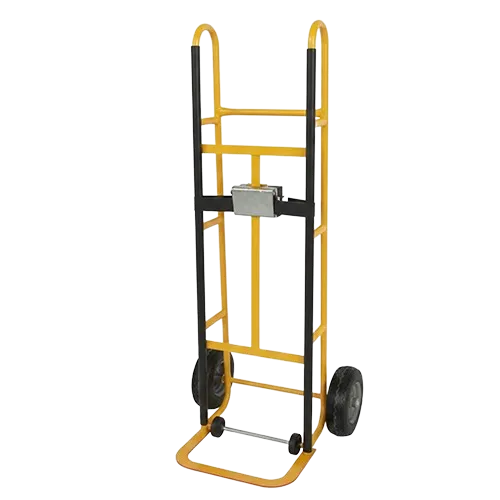
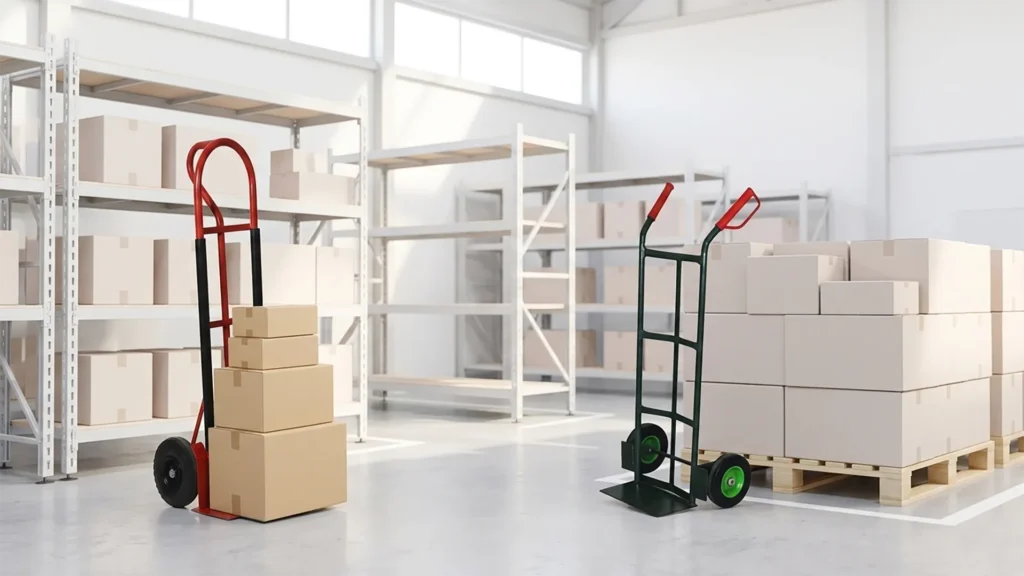
Standard hand trucks are designed for static, evenly distributed loads. However, real-world industrial use often involves eccentric loading (e.g., a heavy engine block sitting on one side of the platform). In these cases, the corner welds of a standard trolley are the first to reach their “yield point” and fail.
Another critical factor is the ratio of Track Width / CoG Height (Center of Gravity). Standard units are optimized for box-shaped goods. If you are moving tall, irregular industrial parts, a standard trolley poses a high risk of tipping over.
The most common mistake in procurement is using “rated capacity” (e.g., 500kg) as the only metric. This ignores the Dynamic Load Factor (phi), which usually ranges from 1.3 to 1.6 depending on how bumpy your warehouse floor is. Without accounting for this, you will see typical failures: weld fatigue, bent wheel frames, and broken handles.
1.2 The Necessity of Finite Element Analysis (FEA)
Standard products have years of field data to prove they are safe. A custom (non-standard) structure has no history. FEA is the only way to quantify structural risk before the first unit leaves the factory.
At Xiangyue, we analyze:
- Equivalent Stress Distribution: Finding where the steel might snap.
- Max Deflection: Ensuring the platform doesn’t sag so much that it hits the floor or messes up the cargo.
- Weight Optimization: By identifying “low-stress zones,” we can remove unnecessary steel. This prevents “over-designing,” which only adds cost and weight without adding safety.
1.3 The Real Cost of Design Errors
- Under-designing: Leads to line shutdowns. In the automotive industry, a single hour of a stopped assembly line can cost tens of thousands of dollars.
- Over-designing: Adds unnecessary weight. If a trolley is 15kg heavier than it needs to be, you pay more for shipping, the operator gets tired faster, and you fit fewer units in a shipping container.
2. The Logic of Materials — Choosing “Right,” Not Just “Better”
Bespoke solutions allow you to pick materials that match your specific environment.
2.1 Structural Steel vs. Aluminum
We primarily compare Q235 and Q345 steel. Q345 offers about 20% weight savings for the same strength but requires more precise welding techniques. For cleanrooms or food-grade environments, 6061-T6 Aluminum is the go-to. While aluminum is lighter, its welds are only about 60% as strong as the base metal, so the design must compensate for this.
2.2 Stainless Steel: 304 vs. 316
In pharmaceutical or high-salt environments, the choice between 304 and 316 stainless steel is critical.
- 316 Stainless contains Molybdenum, which makes it much more resistant to “pitting corrosion” caused by the harsh cleaners used in FDA/GMP facilities.
- NPV Model: While 316L costs about 30% more upfront, if a 304 trolley fails and needs replacing in 3 years, the Total Cost of Ownership (TCO) for the 304 model is actually much higher.
2.3 Casters and Floors
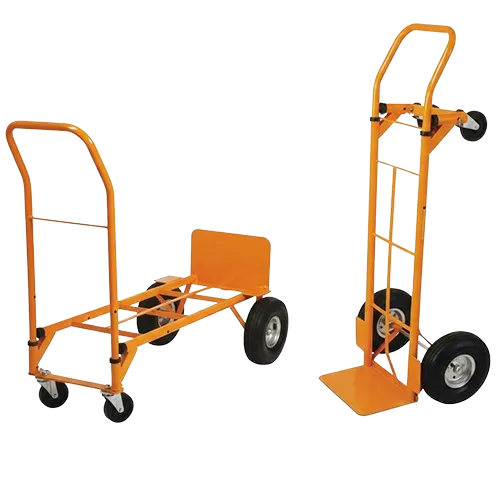
A hard epoxy floor is perfect for Polyurethane (PU) wheels because they have low rolling resistance. However, if your floor is an outdoor steel grate, you need pneumatic or elastic rubber wheels. For heavy loads (>800kg), we recommend a “2 fixed + 2 swivel” layout to make it easier for the operator to push without hurting their back.
3. Industry-Specific Logic: One Size Does Not Fit All
A “trolley” for a hospital has almost nothing in common with a “trolley” for an engine plant.
3.1 Pharmaceutical & Medical
- Hygiene: We use continuous welding with no gaps for bacteria to grow. Every corner has a radius of at least 3mm for easy cleaning.
- Traceability: All 316L steel must come with an EN 10204 3.1 material certificate.
- Static Control: In labs with explosive solvents, the entire trolley must be grounded to the floor with a resistance of less than 10^6 \Omega.
3.2 Heavy Auto Parts
The challenge here is irregular shapes. We design custom locating brackets and V-blocks lined with rubber to hold engine blocks or gearboxes securely. Since these trolleys often move over expansion joints in factory floors, we design for a dynamic load factor of 1.5 to handle the constant vibration.
3.3 E-commerce & AGVs
Modern warehouses use Automated Guided Vehicles (AGVs). A bespoke trolley here needs:
- Precision Interfaces: A docking pin tolerance within pm 1mm.
- Chassis Rigidity: It must not flex when the AGV lifts it from underneath.
- Noise Reduction: PU-wrapped wheels are used to keep noise levels between 55–65 dB.
4. Manufacturing Control: From Idea to Delivery
Quality in custom manufacturing is built through strict processes.
4.1 Requirements Engineering
Before we draw a single line, we ask:
- What is the floor type?
- What is the frequency of use?
- How tall are the operators? (To set the correct handle height).
4.2 Welding Mastery
Non-standard items cannot use “generic” welding. We create a specific Welding Procedure Specification (WPS) for every material combination. We use Visual Testing (VT) for all welds and Penetration Testing (PT) for critical joints in stainless steel.
4.3 Surface Treatment
In the humid air of a port city like Qingdao, standard paint isn’t enough.
- For indoor use: Electrostatic powder coating.
- For outdoor/coastal use: Hot-dip galvanizing (at least 85\mum thick).
5. Shipping Logistics: The Qingdao Advantage
Shipping “air” is the biggest waste in the supply chain.
5.1 Packing Engineering
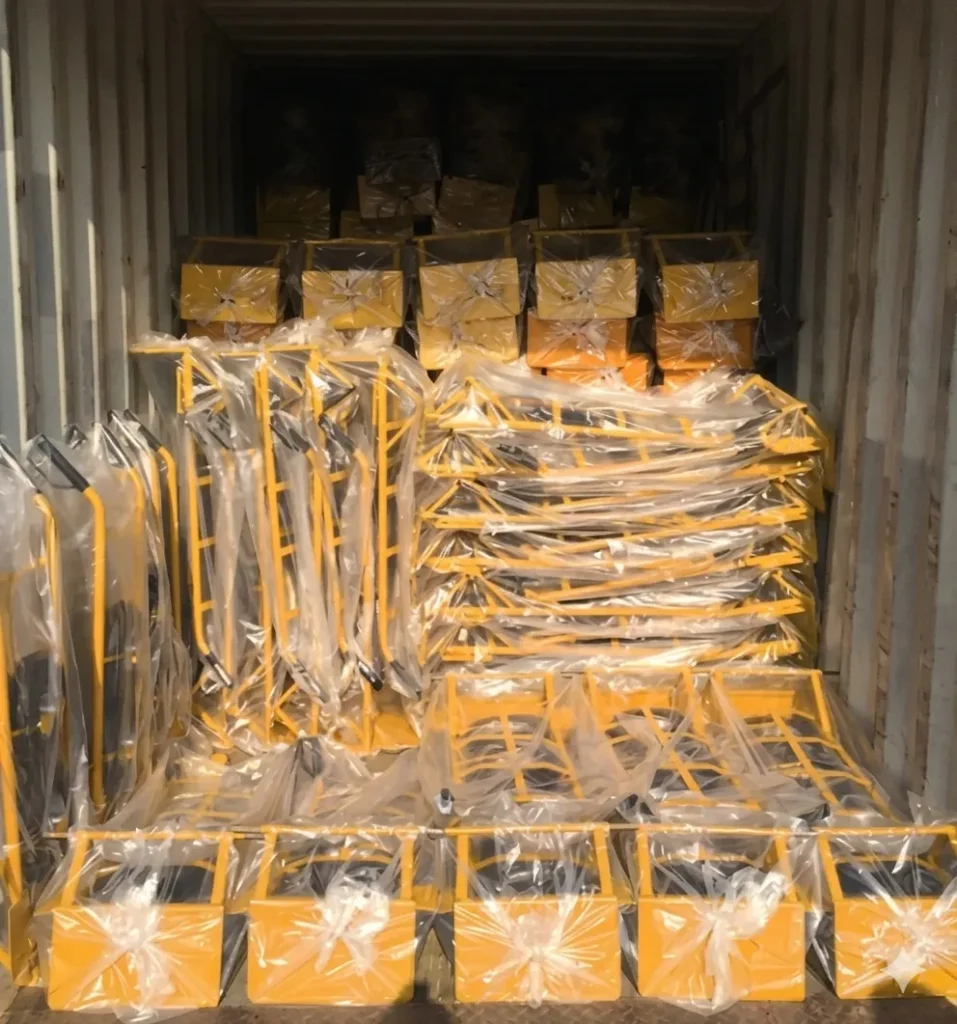
We design bespoke trolleys with shipping in mind. By making handles detachable or using a nesting design, we can often fit 22% more units in a 40HQ container. This directly lowers your landed cost per unit.
5.2 Lead Times
Custom orders usually take about 45 days. We offer VMI (Vendor Managed Inventory) options, where we manufacture the goods and store them in our Qingdao warehouse, shipping them only when your production schedule requires them.
6. How to Evaluate a Custom Supplier
When comparing quotes, look beyond the price tag.
- Ask for the FEA Report: If they can’t provide one, they are guessing, not engineering.
- Check the WPS: A professional factory has documented “recipes” for every weld.
- Calculate TCO: Ask for an estimated lifespan. A trolley that costs 20% more but lasts twice as long is the cheaper option.
At Xiangyue, we combine 20 years of data with a location near Qingdao Port to provide solutions that are engineered for the real world.
Need a technical quote for your specific facility?