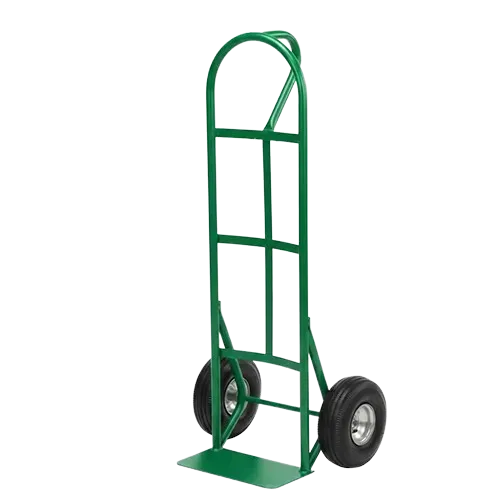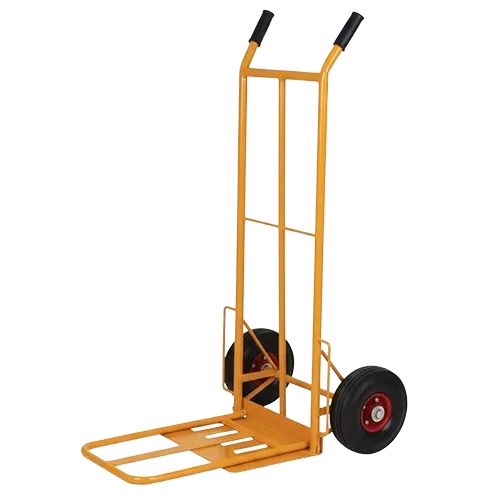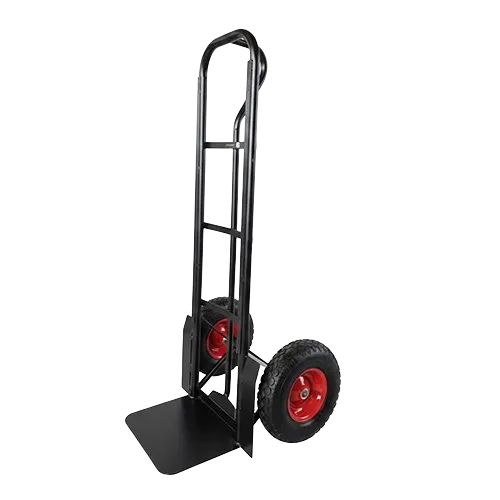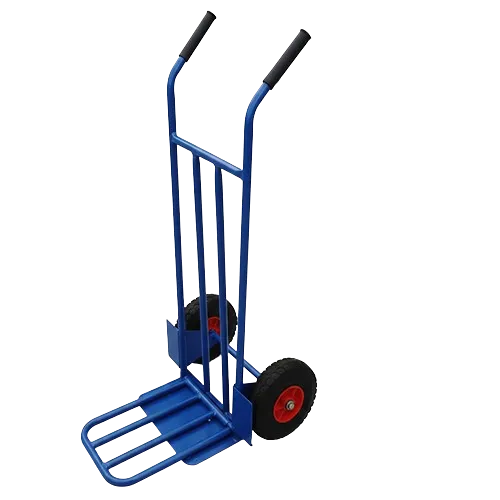
When overseas buyers and wholesale distributors look for a reliable manufacturing partner in China, they all share the same primary concern: consistency. If you are ordering 1,000 heavy-duty hand trucks, you need the absolute certainty that unit #1,000 will be just as strong, durable, and perfectly aligned as unit #1.
A glossy product catalog cannot guarantee this consistency. The only thing that guarantees quality is a strictly controlled manufacturing process. Today, we are opening our doors to show you exactly how we build our material handling equipment. By understanding the OEM Hand Truck Production Flow in our Factory, you will see firsthand how we control material costs, eliminate structural defects, and optimize packaging to save your ocean freight margins.
Here is the step-by-step journey of how a simple steel tube is transformed into a 300kg-capacity commercial delivery cart.
Step 1: Raw Material Sourcing & Strict Incoming Inspection
A heavy-duty hand truck is only as good as the metal it is built from. The very first step of the OEM Hand Truck Production Flow in our Factory begins long before the assembly line is turned on.
We do not buy cheap, thin-walled scrap metal. Depending on the model, we source industrial-grade Q195 or Q235 high-tensile carbon steel or 6061-T6 extruded aluminum.
When a batch of steel tubing arrives at our facility, our Quality Control (QC) team immediately measures the wall thickness using digital calipers. Many low-cost suppliers secretly reduce the tube thickness to 0.9mm to save money, which leads to the frame bending under heavy warehouse loads. We ensure our structural tubing meets the strict 1.2mm to 1.5mm wall thickness requirements. Only after the raw metal passes this hardness and thickness test is it allowed to enter the cutting phase.
Step 2: CNC Tube Cutting and Precision Bending
Once the raw steel is approved, it moves to the shaping department. This is where the frame of your hand truck starts to take form.
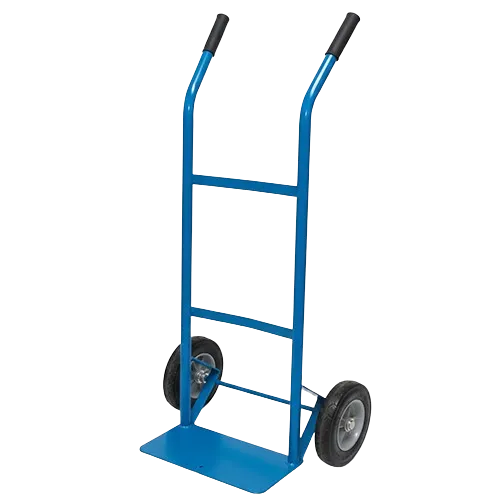
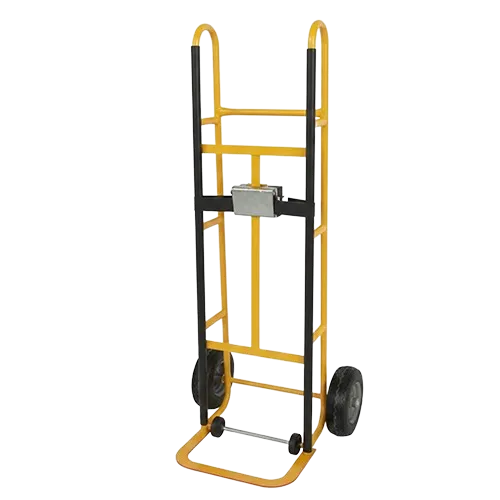
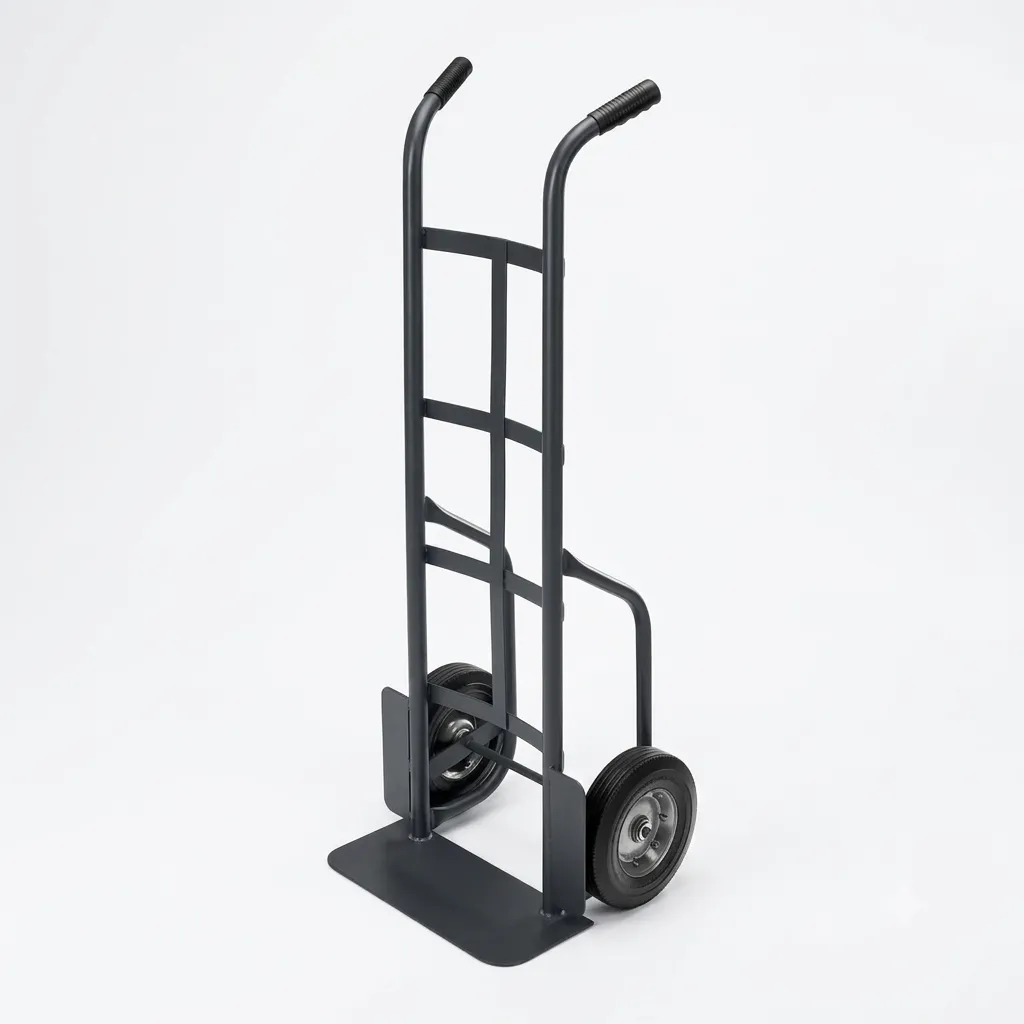
Using automated CNC cutting machines, the steel tubes are sliced to the exact millimeter required by your specific blueprint. Whether you are ordering a standard dual-handle delivery truck or a specialized P-handle warehouse cart, precision at this stage is non-negotiable.
Next comes the bending process. We use hydraulic CNC tube benders to create the smooth curves of the handles and the mainframe. Cold-bending steel requires exact pressure; if done manually or with outdated equipment, the metal can pinch, wrinkle, or weaken at the bend radius. Our CNC benders maintain the full structural integrity of the tube, ensuring that operators can comfortably tilt a 300kg (660 lbs) load without feeling any flex in the handle.
Step 3: Heavy-Duty Stamping for the Toe Plate
The toe plate (also known as the nose plate) is the most abused part of any hand truck. It is constantly slammed under heavy boxes, wooden pallets, and machinery.
In this phase, thick steel sheets (typically 3.5mm to 5.0mm thick) are placed into our heavy-duty hydraulic stamping presses. The press cuts the plate to size and creates the beveled edge that allows delivery drivers to slide the cart under parcels effortlessly.
More importantly, this is where we prepare the reinforcement gussets. For our high-capacity models, we stamp out thick triangular steel gussets. These will later be welded to the junction between the toe plate and the vertical frame to prevent the plate from sagging over time.
Step 4: Automated Robotic Welding (The Core of Durability)
A critical milestone in the OEM Hand Truck Production Flow in our Factory is our welding process. Welding is what holds the entire product together, and it is an area where we refuse to cut corners.
While manual welding is still used for small custom prototypes, all of our bulk wholesale orders are processed through automated robotic welding lines. Why? Because human welders get tired at the end of a long shift, which can lead to missed spots or weak joints. Robotic welding arms provide:
- Deep, consistent weld penetration at high-stress points.
- Zero missing welds, ensuring every joint is fully sealed.
- Perfect visual aesthetics, with smooth, clean weld seams that look professional to your end-users.
Whether we are attaching side wheel guards (fenders) to protect cargo, or securing the axle brackets, robotic welding guarantees that every single frame can easily pass dynamic payload testing.
Step 5: Surface Treatment & Powder Coating
Once the frame is fully welded, it looks like raw, dirty metal. If we painted it right away, the paint would peel off within a month. Therefore, surface preparation is one of the most vital phases of the OEM Hand Truck Production Flow in our Factory.
First, the bare frames go through a multi-stage chemical wash. They are submerged in a degreasing tank to remove any cutting oils, followed by a zinc phosphating bath. This process slightly etches the metal, giving the paint something to grab onto, and creates a base layer of rust resistance.
Next, the frames enter the electrostatic powder coating booth. Rather than using cheap liquid spray paint, we spray the frames with a dry industrial powder that clings to the metal like a magnet. The frames are then baked in a high-temperature curing oven at around 190°C.
The result? A tough, impact-resistant finish that complies with a 48-hour neutral salt spray test. This ensures your hand trucks will not rust easily, even if they are used in humid coastal cities or left outdoors in the rain. As an OEM buyer, you can also customize this step by selecting your corporate RAL or Pantone colors (like Safety Red, Industrial Yellow, or Matte Black).
Step 6: Wheel Assembly & Hardware Customization
A hand truck is useless if it doesn’t roll smoothly. Customization is a huge part of the OEM Hand Truck Production Flow in our Factory, especially when it comes to the wheel assemblies and casters.
Depending on your market’s needs, we prepare the specified wheels to be packed with the frame:
- 10-inch Pneumatic Tires: Ideal for outdoor delivery drivers, offering maximum shock absorption over gravel and curbs.
- Microcellular PU Foam Wheels: The “flat-free” option. They feel like air-filled tires but will never puncture, making them perfect for construction sites with sharp debris.
- TPR Casters: For our platform warehouse carts, we use non-marking Thermoplastic Rubber wheels that glide quietly over epoxy floors without leaving black skid marks.
We pair these wheels with heavy-duty steel rims and dual precision sealed ball bearings (such as the 6204-RS grade). This drastically reduces the “starting force” required to push a heavy load, minimizing worker fatigue.
Step 7: Final Quality Control (QC) & Load Testing
Before anything goes into a box, it must pass our strict QC checkpoints. The quality assurance stage of the OEM Hand Truck Production Flow in our Factory involves both visual inspections and physical stress tests.
Our inspectors check the powder coating for any scratches or thin spots. They verify that the P-handles are perfectly aligned and that the axles are straight. Furthermore, random samples from the production batch are subjected to static load testing (placing 300kg of iron weights on the toe plate for an extended period) and dynamic drop testing. Only when the batch proves it can handle the promised workload do we sign off for packaging.
Step 8: SKD Packaging (Saving Your Ocean Freight)
The final stage of the OEM Hand Truck Production Flow in our Factory focuses directly on your profit margins by optimizing ocean freight costs.
Shipping fully assembled hand trucks wastes a massive amount of “empty air” inside a shipping container. Instead, we utilize a highly efficient SKD (Semi-Knocked Down) nesting packaging method.
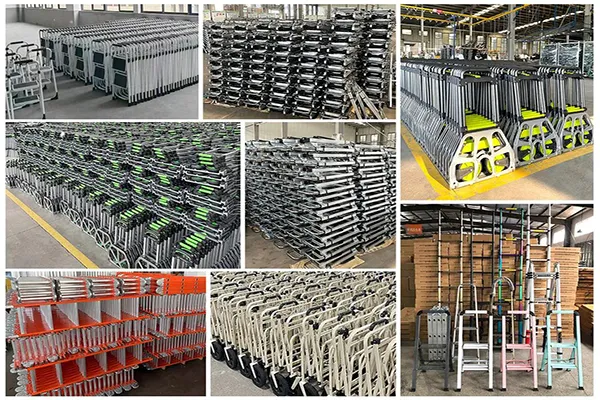
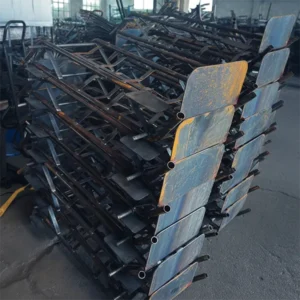
We wrap the steel frames in protective PE foam to prevent scratching and nest them tightly together. The wheels, axles, and hardware packs are boxed separately and placed in the gaps. By using this logistical engineering, we can load up to 1,000 to 1,100 units into a single 40’HQ container.
This packing method slashes your per-unit shipping cost dramatically compared to buying fully assembled carts. When the container arrives at your distribution center, the final assembly takes less than 3 minutes per unit with basic hand tools. (For e-commerce clients, we also offer individual 5-layer corrugated master cartons for drop-shipping).
Partner with a Transparent Manufacturer
When you understand how a product is made, you can buy with confidence. By maintaining strict control over every single step of the OEM Hand Truck Production Flow in our Factory, we help global brands, distributors, and logistics companies eliminate product returns and lower their total procurement costs.
From selecting the right thickness of carbon steel to packing the container to its absolute maximum limit, every decision we make is designed to give you a competitive edge in your local market.
Are you looking to source reliable, heavy-duty commercial hand trucks or customize a new model for your fleet? Contact our sales engineering team today to get a detailed wholesale quotation, and let our production line work for your business.