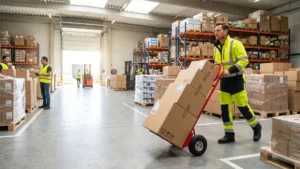
In the high-frequency, uncompromising environment of global Food and Beverage (F&B) distribution, profit margins are frequently won or lost right at the delivery ramp. Route drivers and logistics fleets face a grueling daily reality: navigating tight urban corridors, hauling heavy beverage crates over uneven curbs, and wrestling with material handling equipment in highly unpredictable weather conditions.
When procurement directors and global fleet managers set out to source new equipment, they are inevitably confronted with the industry’s most enduring debate: Should the fleet rely on traditional heavy-duty steel, or transition to lightweight aerospace-grade aluminum?
The decision extends far beyond the initial FOB unit price. Choosing the wrong structural material can inflate worker compensation claims due to chronic physical fatigue, accelerate fleet replacement cycles due to rapid rust and corrosion, and dramatically increase your landed shipping costs. When evaluating the total cost of ownership (TCO), making the strategic switch to a premium wholesale aluminum hand truck can fundamentally transform route efficiency. This comprehensive engineering guide breaks down the metallurgical properties, operational ergonomics, and global logistics economics between steel and aluminum.
1. The Metallurgical Baseline: Understanding the Raw Materials
Before evaluating operational performance on the street, procurement teams must understand the raw material physics that dictate a hand truck’s behavior. These carts are dynamic tools subjected to intense static weights and violent axial loads.
The Case for Traditional Carbon Steel
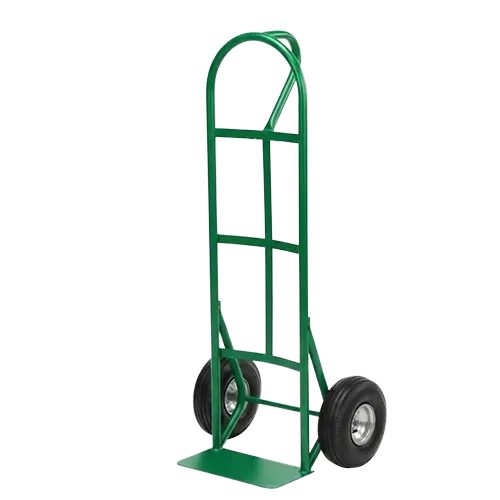
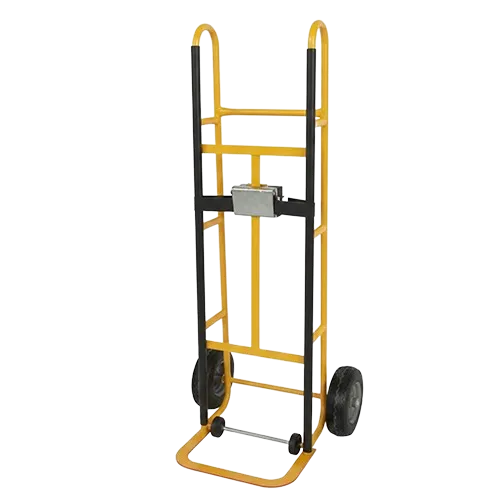
For decades, high-tensile carbon steel has been the default material for industrial hand trucks. Steel is an alloy of iron and carbon, renowned for its exceptional yield strength and impact resistance.
- Impact Tolerance: Steel absorbs kinetic energy exceptionally well. When a fully loaded steel cart is repeatedly dropped off a delivery truck tailgate, the material tends to dent rather than crack.
- Manufacturing Simplicity: Carbon steel is highly receptive to standard MIG welding. This allows factories to mass-produce fully welded, rigid tubular frames at a relatively low raw material cost.
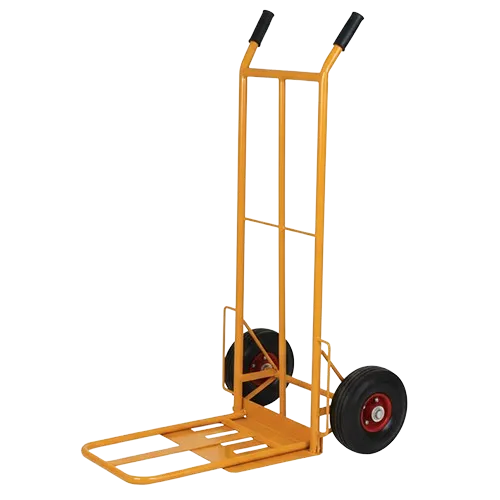
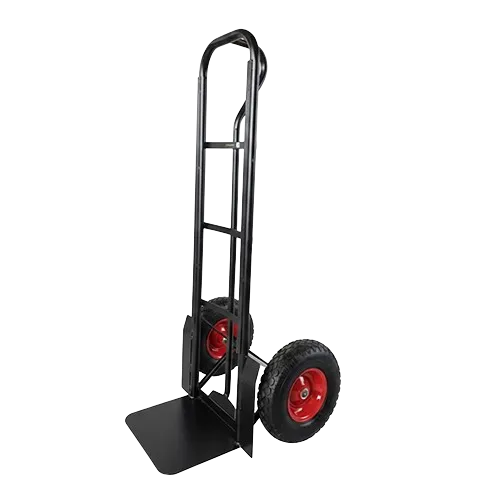
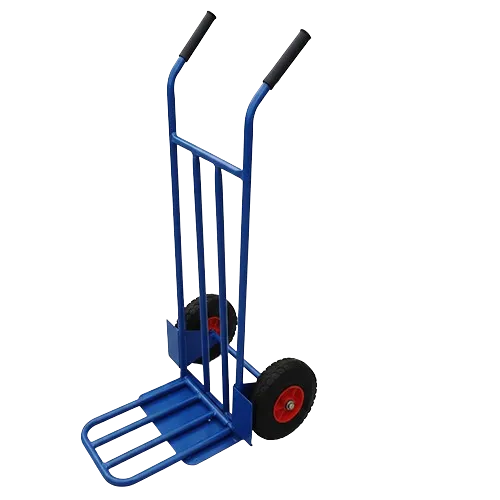
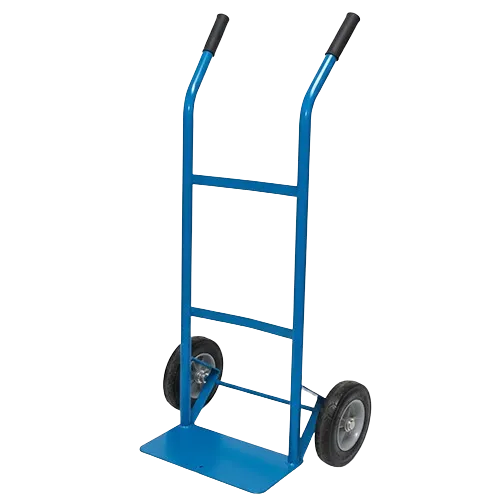
- The Weight Penalty: The primary drawback of steel is its extreme density. A standard heavy-duty steel hand truck often weighs between 14 kg and 18 kg (30 to 40 lbs) before a single beverage crate is even loaded onto the toe plate.
The Transition to Extruded Aluminum (6061-T6)
Modern fleet operations are rapidly pivoting toward aluminum, specifically aerospace-grade alloys like 6061-T6. This specific alloy is tempered and treated with silicon and magnesium, resulting in structural characteristics that rival mild steel while permanently altering the weight equation.
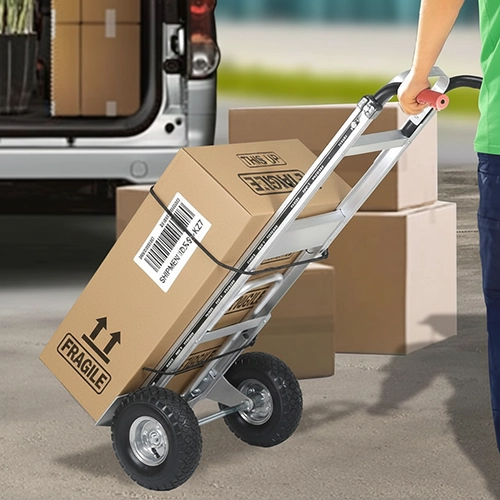
- The Density Advantage: Aluminum is roughly one-third the density of steel. A certified wholesale aluminum hand truck engineered for commercial route delivery typically weighs only 6.5 kg to 8 kg (14 to 18 lbs).
- Natural Oxidation Barrier: Unlike iron-based steel, aluminum does not rust. When exposed to the atmosphere, it instantly forms a microscopic layer of aluminum oxide. This invisible barrier protects the underlying metal from further degradation, even in highly corrosive saltwater or chemical environments.
- Modular Assembly: Because welding aluminum requires highly specialized inert gas environments, professional aluminum delivery carts are predominantly assembled using heavy-duty bolts and interlocking extruded channels. This structural modularity offers massive advantages in maintenance and global shipping.
2. Analyzing the Food & Beverage Logistics Environment
To crown a winner between steel and aluminum, we must analyze the specific hostility of the F&B delivery environment. A beverage delivery cart is subjected to chemical, physical, and environmental stressors that standard dry-warehouse carts never encounter.
The Threat of Corrosion in Cold-Chain Logistics
Beverage delivery is inherently wet. Carts are frequently loaded onto refrigerated trucks, transitioning rapidly between cold, high-humidity cargo bays and hot, humid outdoor loading docks. This constant thermal shifting creates intense condensation directly on the metal frame. Furthermore, accidental spills of highly acidic sodas, craft beers, or concentrated syrups are daily occurrences.
Even when coated with premium industrial powder coating, a steel frame will inevitably sustain scratches from daily abuse. Once the protective coating is breached, the underlying carbon steel is exposed to moisture. Rapid oxidation (rust) occurs, eating away at the structural integrity of the frame and creating an unsanitary appearance that violates strict food-service hygiene protocols.
In these sterile F&B environments, an anodized wholesale aluminum hand truck is the undisputed champion of hygiene. It can be continuously subjected to rain, condensation, and aggressive chemical wash-downs without any risk of structural rust. For fleets servicing restaurants, sterile commercial kitchens, and grocery chains, the pristine, non-corrosive nature of aluminum is a strict regulatory requirement.
Navigating the 220 lbs Payload Requirement
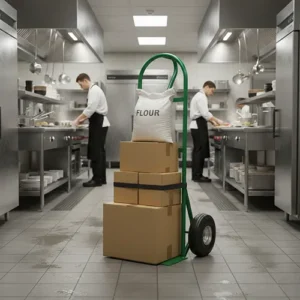
A standard commercial route delivery does not involve moving 600 lbs of solid steel engine blocks. F&B delivery is a high-frequency, moderate-load operation.
- A standard case of 12-ounce canned beverages weighs approximately 20 lbs.
- A practical, safe stack for a single human operator navigating urban curbs is roughly 8 to 10 cases.
- Therefore, an optimal beverage delivery cart must reliably support a continuous working load of 160 lbs to 220 lbs.
While a heavy-duty steel cart might boast a 600 lbs capacity, this is massive structural overkill for F&B routes. Premium aluminum models are engineered specifically for this operational sweet spot, providing a certified, continuous load capacity of 220 lbs (100 kg). This perfectly aligns with real-world demands, ensuring operators have the structural support they need without dragging around unnecessary dead weight.
3. Ergonomics and the Hidden Cost of Driver Fatigue
In the modern logistics industry, human capital is far more expensive than material handling equipment. Driver retention is a massive financial challenge for major beverage distributors. The physical toll of route delivery directly impacts worker compensation claims, sick leave, and daily route completion times.
The Cumulative Lifting Penalty
Consider the mathematics of delivery fatigue. A route driver may execute 40 to 60 individual stops in a single 10-hour shift. At each stop, the driver must physically lift the hand truck out of the delivery vehicle, lower it to the pavement, execute the delivery, and lift the empty truck back into the bay.
- Using a Steel Cart (16 kg / 35 lbs): Lifting a 16 kg cart 50 times a day means the driver is manually deadlifting 800 kg (1,760 lbs) of pure equipment weight every single shift.
- Using an Aluminum Cart (6.5 kg / 14.3 lbs): Lifting a 6.5 kg frame 50 times a day requires lifting only 325 kg (715 lbs).
By deadlifting a 6.5 kg wholesale aluminum hand truck instead of a 16 kg steel cart, a logistics director instantly eliminates nearly half a ton of useless lifting from a driver’s daily workload. This extreme reduction in physical exertion drastically lowers the incidence of lower back strain, shoulder injuries, and repetitive stress injuries (RSI). When drivers are less fatigued, they process deliveries faster, interact more positively with retail clients, and are significantly less likely to leave the company due to physical burnout.
4. Maintenance, Repair, and Fleet Longevity
Procurement managers must look beyond the initial purchase order and evaluate how equipment behaves over a 36-to-48-month lifecycle.
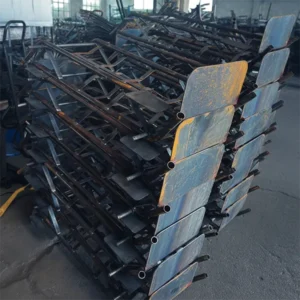
Heavy-duty steel hand trucks are almost universally manufactured as single, fully welded units. While this provides initial rigidity, it creates a logistical nightmare for fleet maintenance. If a driver accidentally backs a forklift into a steel cart and bends the main axle bracket, the entire unit is effectively destroyed. Repairing welded steel requires an onsite fabricator with cutting torches and welding gear—a process that costs more in labor than the residual value of the cart itself.
Conversely, professional aluminum delivery hand trucks are engineered utilizing a bolted, modular architecture. The extruded aluminum side rails, die-cast toe plates, wheel brackets, and handle assemblies are all distinct, interchangeable components. Because components are bolted, maintaining a wholesale aluminum hand truck fleet requires zero welding. If a toe plate is damaged during a severe curb drop, the fleet mechanic simply unbolts it and attaches a new OEM replacement part in under five minutes. Distributors can maintain a small inventory of spare parts and keep their aluminum fleet operational indefinitely, drastically lowering the long-term capital expenditure.
5. Global Sourcing Logistics: Maximizing Container ROI
For international B2B distributors and wholesale procurement networks, the physical manufacturing of the cart is only half the equation. The financial viability of sourcing a fleet is heavily dependent on ocean freight efficiency. Shipping empty space across the Pacific rapidly destroys wholesale profit margins.
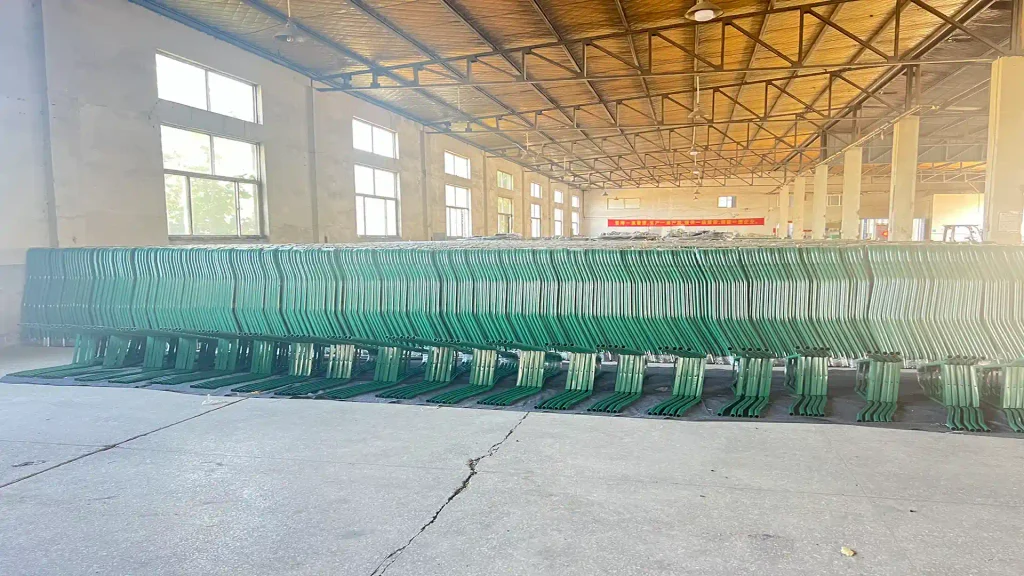
Because commercial steel carts are fully welded at the factory, they cannot be disassembled for shipping. When loading a 40-foot High Cube (40’HQ) ocean container, these rigid, L-shaped steel structures take up a massive amount of Cubic Meters (CBM). An importer may only be able to fit 300 to 450 fully assembled steel carts into a container. This low shipping density inflates the landed cost of each individual unit.
When sourcing a wholesale aluminum hand truck directly from an OEM facility, importers benefit from Completely Knocked-Down (CKD) flat-pack engineering. The aluminum frame, axle, toe plate, and pneumatic wheels are densely flat-packed into reinforced export cartons. This aggressive spatial optimization eliminates the shipment of “empty air.” A standard 40’HQ container can comfortably accommodate upwards of 1,100 units of a disassembled aluminum model.
By more than doubling the container loading density compared to welded steel, international distributors drastically slash their per-unit landed freight costs. This structural supply chain advantage provides B2B importers with the financial flexibility to offer superior retail pricing while retaining premium profit margins.
Conclusion: Making the Strategic Fleet Decision
When evaluating the traditional debate between steel and aluminum for the food and beverage industry, the engineering and financial data heavily favors the transition to lightweight aerospace-grade alloys.
While carbon steel remains a viable option for moving 500 lbs industrial engine blocks in a dry, static warehouse, it is fundamentally unsuited for the rapid, wet, and physically demanding environment of urban route delivery. Investing in a reliable wholesale aluminum hand truck is a strategic maneuver to protect profit margins. It eliminates the liability of rust in sterile F&B environments, slashes the physical lifting burden on delivery personnel to combat driver turnover, and leverages modular CKD packaging to maximize your ocean container ROI.