Importing material handling equipment for your local market is a highly profitable business model. Whether you are a brand owner, a wholesale distributor, or a fleet manager for a logistics company, sourcing directly from China can significantly lower your costs and increase your profit margins.
However, buying in bulk requires extreme trust. When you search online, hundreds of suppliers claim to be the best. If you choose the wrong supplier, you might face poor welding, rusting frames, delayed shipments, or incredibly high ocean freight costs.
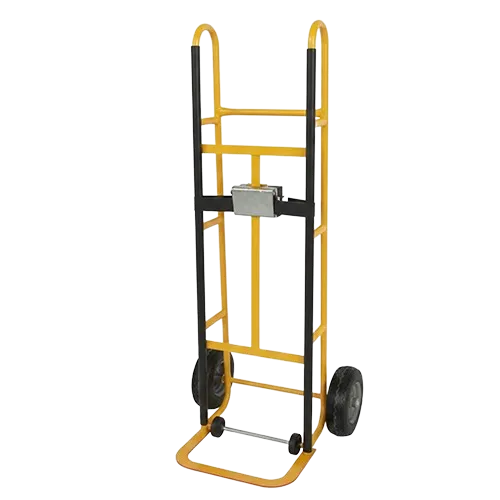
To build a long-term, successful business, you do not just need a supplier; you need a professional custom hand truck manufacturer. You need a factory partner that understands your specific market needs, respects your brand guidelines, and helps you save money on international shipping.
In this comprehensive guide, we will walk you through the exact steps to evaluate, select, and partner with the right factory in China. We have kept the language simple and straightforward so that every business owner, regardless of their native language, can easily navigate the sourcing process.
1. Understand Your Own Custom Requirements First
Before you start sending emails to factories in China, you must have a clear idea of what you actually need. A good manufacturer will ask you specific questions. If you do not know the answers, it is hard for them to give you an accurate price.
When customizing a hand truck, you are usually looking at two main paths:
- OEM (Original Equipment Manufacturer): You want to put your own brand logo, specific colors, and custom packaging on a hand truck model that the factory already makes.
- ODM (Original Design Manufacturer): You want the factory to design and build a completely new hand truck based on your specific blueprints and ideas.
For most wholesale distributors, OEM is the fastest and most cost-effective route. Before contacting a custom hand truck manufacturer, write down your basic specifications:
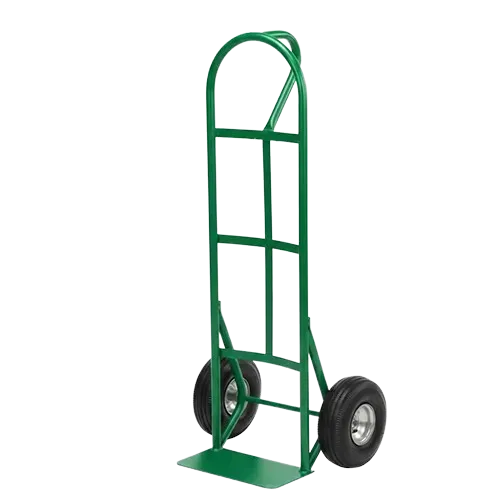
- Load Capacity: Do you need a 120 kg (264 lbs) capacity for everyday retail, or a 300 kg (660 lbs) heavy-duty frame for industrial warehouses?
- Toe Plate Size: Do your customers move standard boxes, or do they need an extended toe plate for bulky cargo?
- Wheel Type: Do you want standard 10-inch pneumatic (air-filled) tires for outdoor shock absorption, or puncture-proof PU solid wheels for factories with sharp debris on the floor?
💡 The Why: Why do you need clear specifications before sourcing?
The Why: Having clear specifications protects you from “hidden downgrades.” If you simply ask for “a cheap hand truck,” a bad supplier might give you thin steel tubes and cheap bearings to win the order. By defining your load capacity and wheel type upfront, you force the factory to quote based on high-quality standards. This makes it easy for you to compare prices between different factories fairly.
2. Factory vs. Trading Company: How to Spot the Difference
When you search on B2B platforms, you will encounter two types of businesses: direct factories and trading companies.
A trading company is a middleman. They buy from a factory and sell to you, adding their own profit margin. While trading companies can sometimes offer a wide variety of mixed products, you generally want to work directly with a factory for bulk hand truck orders.
Here is how you can tell if a supplier is a real direct factory:
- Check Their Product Catalog: A true direct factory specializes in one specific industry. If a supplier sells hand trucks, wheelbarrows, and platform carts, they are likely a factory. If their catalog includes hand trucks, baby toys, and phone cases, they are 100% a trading company.
- Ask for a Video Call: Do not just rely on photos. Ask the sales representative to have a quick WhatsApp or WeChat video call from the factory floor. A real manufacturer will gladly show you their welding machines and assembly lines.
- Look at Their Location: In China, certain industries are clustered in specific cities. For example, Qingdao is one of the most famous hubs for manufacturing metal wheelbarrows and hand trucks because of its deep-water port and strong steel industry.
💡 The Why: Why is dealing with a direct factory better for custom orders?
The Why: Communication speed and pricing. If you want to change the color of the powder coating or add a custom laser-cut logo to the toe plate, a direct factory engineer can confirm if it is possible within 24 hours. A trading company has to translate your request, ask the factory, wait for an answer, and then reply to you. Plus, a direct custom hand truck manufacturer will offer you the true wholesale price without the middleman markup, giving you a massive advantage over your local competitors.
3. Evaluating Engineering and Customization Capabilities
Not every factory has the skill to customize products. Some factories only know how to produce standard, low-cost models. For your business to stand out in a crowded market, you need a partner with strong R&D (Research and Development) capabilities.
When auditing a factory, ask them about their engineering process:
- 3D CAD Modeling: Can their engineers provide detailed 3D drawings of your custom hand truck before production begins?
- Custom Tooling and Molds: If you want a uniquely shaped P-handle for better ergonomics, can the factory modify their bending machines to make it?
- Branding Options: Do they offer professional silk-screen printing on the frame, or laser-cut logos directly onto the heavy-duty steel toe plate?
If you are ready to discuss your specific custom branding needs, our engineering team is here to help.
👉 Click Here to Contact Our Engineering Team for a Free Custom Blueprint
💡 The Why: Why are 3D drawings necessary for custom orders?
The Why: It removes the risk of miscommunication across different languages. Words can be misunderstood, but a 3D blueprint with exact millimeter measurements is a universal language. Approving a 3D CAD model ensures that the custom frame height and toe plate depth are exactly what you visualized before you spend money on mass production.
4. Quality Control (QC) and Material Standards
The biggest fear of any overseas importer is receiving a 40-foot container full of defective products. A hand truck is a tool designed for heavy physical labor. If the frame bends or the wheels break after one month, your customers will demand refunds, and your brand reputation will be destroyed.
To prevent this, you must partner with a custom hand truck manufacturer that takes Quality Control (QC) very seriously. Here are the three critical areas you must check:
A. Steel Thickness and Yield Strength The heart of any commercial hand truck is its frame. Standard cheap carts use 1.0mm or 1.2mm steel tubing. For true commercial and industrial applications (200kg+ capacity), the factory must use high-tensile carbon steel tubing with a thickness of at least 1.5mm or higher.
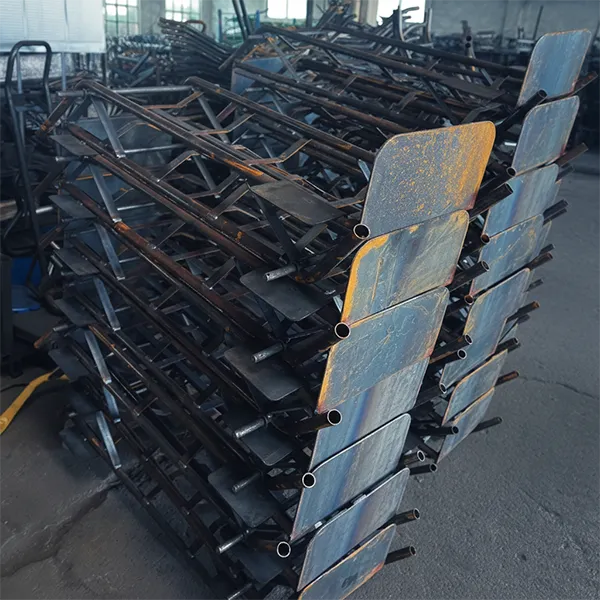
B. Welding Quality Look closely at the joints, especially where the toe plate meets the main frame. Are the welds smooth and continuous? Today, top-tier Chinese manufacturers use robot-assisted welding lines. This ensures every single joint penetrates deeply into the metal, preventing the frame from snapping under heavy, continuous loads.
C. Surface Treatment (Powder Coating) Hand trucks are often used outdoors in the rain, mud, or snow. A cheap liquid paint job will chip off in a week, leading to severe rust. A professional factory will use industrial-grade electrostatic powder coating.
💡 The Why: Why should you ask for a “Salt Spray Test” report?
The Why: A Salt Spray Test is a universal laboratory method used to check the corrosion resistance of metal coatings. If a factory tells you their powder coating is high-quality, ask them if it can pass a 48-hour or 72-hour salt spray test. If it can, it means the hand truck frame can survive highly humid warehouse environments or rainy outdoor delivery routes without rusting. This guarantees a long product lifespan for your end-users.
5. Order Minimums (MOQ) and Production Lead Times
When you buy directly from a Chinese factory, you cannot buy just 10 or 20 units. Factories operate on mass production principles to keep the cost per unit very low. This introduces the concept of MOQ (Minimum Order Quantity).
For custom hand trucks, a standard MOQ is usually between 300 to 500 pieces per model.
- Initial Trial Orders: Some factories understand that entering a new market is risky. A good factory partner will often allow a slightly lower MOQ (like 200 pieces) for your very first trial order to help you test the local market demand.
- Production Lead Time: You need to manage your inventory carefully. Once your 3D drawings are approved and your deposit is paid, a standard production cycle takes about 15 to 25 days. Add another 20 to 30 days for ocean shipping, and you should expect your goods to arrive in about two months.
💡 The Why: Why do custom orders require a strict MOQ?
The Why: Factory economics. To make your custom color, the factory has to stop the production line, clean out the old paint powder, and load your specific Pantone color. They also have to buy steel pipes in bulk minimums from the raw material markets. If they only make 50 custom carts, the labor cost to set up the machines is higher than the cost of the carts themselves. MOQs ensure that the factory can run efficiently, which is exactly how you get that incredibly low wholesale price.
6. Packaging Solutions for Ocean Freight: The Secret to High Profits
Many buyers focus entirely on the price of the hand truck itself, but they ignore the logistics. This is a massive mistake. Ocean shipping costs can destroy your profit margins if your goods are not packed correctly.
A hand truck is awkwardly shaped—like an “L”. If you ask the factory to ship them fully assembled, they take up a huge amount of dead space inside the shipping container. You will end up paying thousands of dollars to ship empty air.
A premier custom hand truck manufacturer will offer you SKD (Semi-Knocked Down) or CKD (Completely Knocked Down) flat-pack solutions.
In an SKD packing layout, the main frame, the axle, and the wheels are packed tightly together into a flat, rectangular carton.
💡 The Why: Why is SKD packing the most important factor for B2B importers?
The Why: It mathematically slashes your Landed Cost (the total cost of the product + shipping). For example, if you ship fully assembled hand trucks, you might only fit 400 units into a 40’HQ container. But if the factory uses smart SKD flat-packing, you can densely stack up to 1,100 to 1,800 units into that exact same container. Since you pay a fixed price for the container, multiplying the number of units inside by three means your shipping cost per unit drops by almost 70%. This packaging strategy allows you to easily beat your local competitors on retail pricing.
7. Communication, Compliance, and After-Sales Support
A business transaction does not end when the container leaves the Chinese port. It is the beginning of a long-term supply chain partnership.
Clear Communication: Language barriers can cause disastrous production mistakes. When you first contact a factory, evaluate their sales team. Do they reply to your emails promptly? Do they speak clear, professional English? Do they understand your market’s specific terminology? A good sales representative acts as your personal project manager inside the factory.
International Compliance: Depending on your country, you might need specific paperwork for customs clearance. A professional factory operates under ISO 9001:2015 management systems. They will easily provide you with a Commercial Invoice, a detailed Packing List, the Bill of Lading (B/L), and most importantly, a Certificate of Origin (C/O) to help you clear customs smoothly.
After-Sales Parts Support: Hand trucks are wear-and-tear items. Over a few years of heavy use, wheels might get punctured, and bearings might wear out.
💡 The Why: Why must you ask about spare parts before you place a bulk order?
The Why: To secure your B2B clients. If you are selling to a local supermarket chain or a delivery fleet, they will not want to throw away a perfectly good steel frame just because one tire went flat. A reliable factory will gladly include a batch of extra wheels, spare axle hardware, and replacement bearings in your container. Being able to offer instant replacement parts to your local customers makes your brand look highly professional and builds incredible customer loyalty.
Conclusion: Taking the Next Step
Finding the right custom hand truck manufacturer in China is about much more than just searching for the lowest price. It is about finding a factory that understands the balance between high-tensile steel durability, robotic welding precision, and the container-packing math that saves you money on ocean freight.
When you prioritize clear specifications, demand rigorous quality control like salt spray testing, and utilize SKD flat-packing, you transform a simple import transaction into a highly profitable, long-term business asset.
If you are ready to scale your business, upgrade your logistics fleet, or launch your own private-label brand· of heavy-duty hand trucks, our factory floor is ready for your project. We handle everything from bespoke 3D CAD design to high-density container loading.
👉 Get in Touch with Us Today to Start Your Custom Order
Stop worrying about bad quality and high shipping costs. Let our manufacturing expertise build the foundation for your business growth.