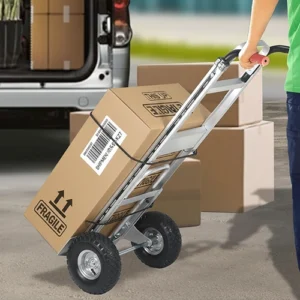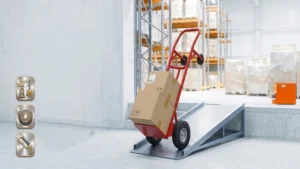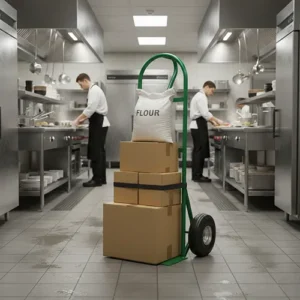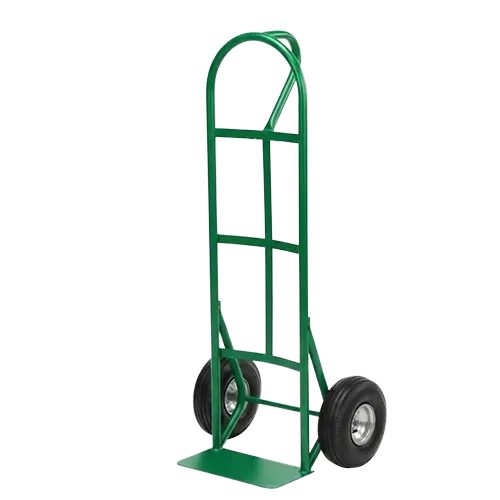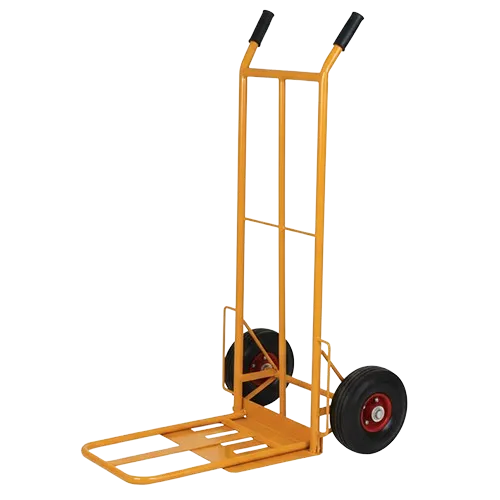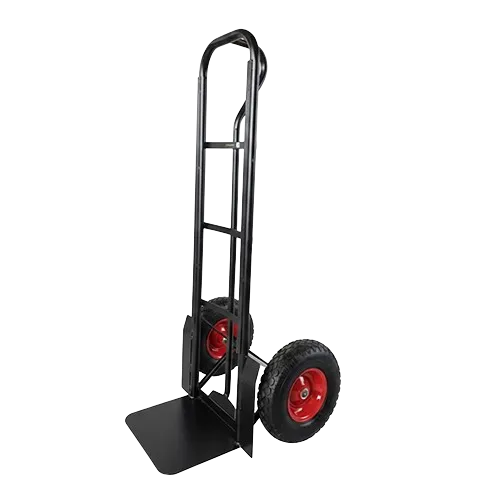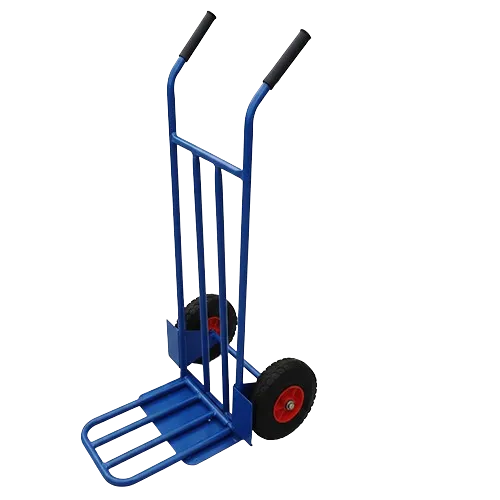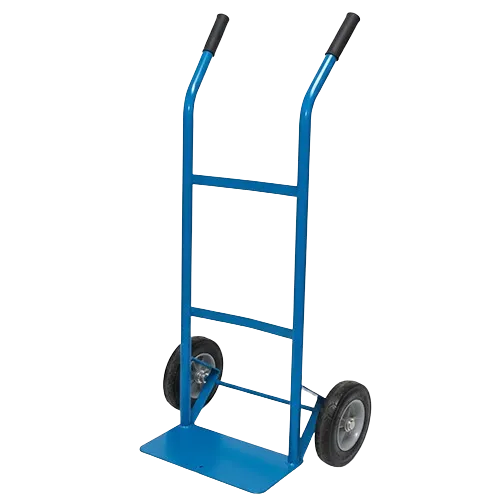
If you run a commercial delivery fleet, placing a heavy duty moving hand truck wholesale order is a major business decision. It is not just about buying a tool. It is about investing in the backbone of your daily logistics.
Many fleet managers make the mistake of buying consumer-grade carts from local hardware stores or third-party trading websites. These cheap carts look good on a screen, but they fail quickly in the real world. Axles bend. Wheels break. Welds snap.
When a cart breaks during a delivery, it costs you time and money. It can also cause severe worker injuries and damage expensive freight like refrigerators or industrial safes.
The best way to avoid these problems is to buy directly from a trusted OEM factory. Buying direct gives you access to better materials, custom safety features, and lower shipping costs. This guide will walk you through exactly what to look for when sourcing commercial-grade moving fleets.
1. Frame Materials: Why Steel is the Industry Standard
The frame is the skeleton of your cart. If the frame is weak, the whole unit is useless. In the commercial moving industry, you generally choose between two materials: steel and aluminum.
Retail stores love to sell lightweight aluminum carts. They are easy to pick up and they do not rust. But for true heavy-duty work, aluminum has a major flaw. It bends. Under repeated heavy loads, aluminum frames will flex and eventually warp out of shape.
For a true heavy duty moving hand truck wholesale fleet, high-tensile carbon steel is the only choice. We use Q235 grade carbon steel. This material is incredibly strong but has just enough flexibility to absorb heavy shocks. When your driver drops a 500 lb load down a step, the Q235 steel absorbs the impact without snapping.
Table 1: Frame Material Comparison Matrix
| Feature | Q235 Carbon Steel | Extruded Aluminum |
|---|---|---|
| Best For | Appliance delivery, warehousing, heavy machinery | Parcel delivery, light retail, food and beverage |
| Load Capacity | 600 lbs to 1000+ lbs | 300 lbs to 500 lbs |
| Durability | Extremely high. Resists bending and impact. | Moderate. Prone to warping under heavy stress. |
| Weight | Heavier. Requires more effort to lift empty. | Very light. Easy to load into a delivery van. |
| Cost | Highly cost-effective for wholesale bulk orders. | More expensive raw material costs. |
2. The Importance of Robotic Welding
Strong steel is not enough. How that steel is joined together matters just as much.
Cheap hand trucks are usually welded by hand in low-tier workshops. Manual spot-welding is often rushed. It leaves tiny air pockets and weak spots inside the metal joints. Over time, the vibration from rolling over warehouse floors will tear these weak welds apart.
We solve this problem by using automated robotic MIG (Metal Inert Gas) welding on our assembly lines. Robots do not get tired, and they do not rush.
Robotic welding creates a continuous, deep-penetrating weld bead at every joint. It creates a smooth “fish-scale” pattern. This ensures that the nose plate and the main axle—the two areas under the most stress—will never break, even under maximum payloads.
3. Protecting the Cargo with Factory Padding
In the commercial delivery business, scratching a customer’s floor or denting a new appliance is a disaster. It leads to angry clients and expensive insurance claims.
You should never rely on your delivery drivers to tie loose blankets around a cart. A professional fleet needs built-in cargo protection.
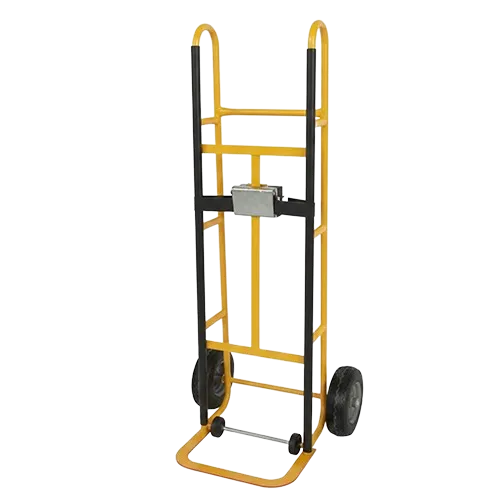
When you order a heavy duty moving hand truck wholesale batch from an OEM factory, you can request integrated padding. We apply high-density, non-marring vulcanized rubber or heavy-duty felt directly to the vertical rails and the front of the nose plate.
This factory-installed padding acts as a permanent shock absorber. It protects the cargo from scratches from the moment it is loaded. We also integrate heavy-duty ratchet strap systems right into the frame. This allows workers to lock bulky items tightly to the cart, preventing dangerous tipping.
4. Climbing Stairs: The Appliance Hand Truck Advantage
Moving a heavy refrigerator up a flight of stairs is the hardest job in logistics. It is also the most dangerous.
Using a standard two-wheel cart on stairs forces the worker to take the full weight of the load on every step. This causes severe back injuries. It also causes jarring impacts that can damage the internal parts of an appliance.
If your fleet handles appliances, you need carts with OEM stair-climbing crawler belts.
These belts are mounted on the back of the hand truck frame. We use low-friction UHMWPE belts on precision rollers. When the worker tilts the cart back against the stairs, the belts grip the edges of the steps. The cart simply glides down the staircase. This takes the strain off the worker and ensures a smooth, safe delivery.
5. Choosing the Right Wheels for the Job
The wheels are the only part of the cart that touches the ground. If you choose the wrong wheels, your workers will struggle to push the loads.
Cheap plastic wheels will crack under heavy weight. Unsealed bearings will fill with dirt and stop spinning. You need to specify exactly what type of wheels your fleet needs.
We use double-shielded carbon steel ball bearings in all our wheel hubs. This keeps dust and water out, making the cart much easier to push.
Table 2: Wheel Selection Guide
| Wheel Type | Best Terrain | Key Advantages | Potential Drawbacks |
|---|---|---|---|
| Thermoplastic Rubber (TPR) | Indoors, polished concrete, tile, wood | Operates silently. Non-marking (will not leave black scuff marks). | Not ideal for rough outdoor gravel or mud. |
| Solid Polyurethane (PU) | Construction sites, mixed indoor/outdoor | 100% puncture-proof. Cushions like air but never goes flat. | Slightly heavier than standard air-filled tires. |
| Pneumatic (Air-Filled) | Soft soil, gravel, outdoor landscaping | Maximum shock absorption. Glides over bumps easily. | Requires air pressure maintenance. Can get flat tires. |
6. How KD Packaging Slashes Your Freight Costs
For B2B buyers, the factory price of the cart is only half the story. The cost of ocean freight is what really impacts your profit margins.
Shipping fully assembled hand trucks is a massive waste of money. You end up paying to ship empty space inside the shipping container.
To solve this, Xiangyue Metal Technology engineers our carts using a Knocked-Down (KD) design. This is a game-changer for your heavy duty moving hand truck wholesale strategy.
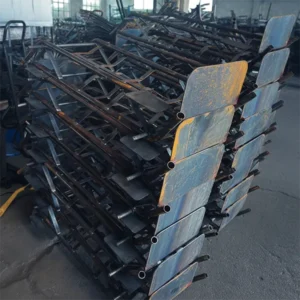
We design the carts so that the main frame, the wheels, the nose plate, and the handles can be packed tightly together unmounted. They are packed in high-strength, 5-ply corrugated export cartons.
This KD design allows us to pack up to 900+ units into a single 40-foot High Cube (40’HQ) container. By maximizing the container density, we dramatically lower your landed cost per unit. You get a better product, and you save thousands of dollars on shipping.
7. Factory Quality Control: What You Should Demand
Finally, you need to know that your factory actually tests the products they make. Do not partner with a factory that only checks the carts at the end of the line.
A reliable OEM manufacturer integrates Quality Control (QC) into every single step of the process. This guarantees that when your container arrives, every cart works perfectly.
Table 3: The OEM Quality Control Matrix
| QC Stage | What is Tested | Why it Matters for You |
|---|---|---|
| Incoming Quality Control (IQC) | Raw Q235 steel tubes, wheel materials, powder coating resin. | Ensures that the core materials are strong enough before production even begins. |
| In-Process Quality Control (IPQC) | CNC bending accuracy, robotic weld penetration, frame alignment. | Stops manufacturing errors on the assembly line. Prevents twisted or crooked frames. |
| Outgoing Quality Assurance (OQA) | Dynamic load tests, brake tests on inclines, salt-spray rust tests. | Guarantees the finished carts meet international safety standards before they ship to you. |
Summary: Partner with a True OEM Manufacturer
Relying on generic, retail-grade moving carts is a fast way to lose money in the commercial logistics business. To stay competitive, you need equipment that is built to last.
By sourcing your fleet directly from a qualified OEM manufacturer, you take control of the quality. You get high-tensile Q235 steel, robotic welds, custom wheels, and massive savings on shipping freight.
Do not let bad equipment slow down your business. Upgrade your fleet with carts designed for real industrial work.
Ready to improve your logistics? Contact our engineering team today. We can provide detailed specs, discuss custom branding options, and offer a highly competitive quote for your next heavy duty moving hand truck wholesale container order.