
When evaluating a medical utility cart wholesale procurement strategy, clinical facility directors and global healthcare distributors must look far beyond basic dimensions and load capacities. In the high-stakes environment of 24/7 hospital wards, diagnostic laboratories, and surgical suites, material handling equipment is an active participant in patient recovery and staff efficiency.
A critical, yet frequently overlooked metric in clinical procurement is acoustic performance. Traditional metal carts equipped with cheap, friction-sleeve rubber or hard plastic wheels generate a continuous, high-pitched mechanical rattle. This noise pollution directly contributes to alarm fatigue among medical staff and severely fragments patient REM sleep cycles. More importantly for healthcare administrators, poor acoustic environments actively lower HCAHPS (Hospital Consumer Assessment of Healthcare Providers and Systems) scores, which can directly reduce federal funding and insurance reimbursement rates.
To solve this systemic issue, B2B distributors must partner directly with an advanced OEM fabrication facility. This executive whitepaper outlines the structural requirements, advanced silent wheel kinematics, and global logistics necessary to source a premium medical utility cart wholesale fleet that actively enhances clinical environments.
1. The Clinical Mandate for Acoustic Engineering
In modern healthcare, silence is not a luxury; it is a strict operational mandate. When an enterprise initiates a medical utility cart wholesale order, they are investing in the acoustic baseline of their entire hospital network.
Generic equipment sourced from lower-tier trading companies ignores acoustic engineering entirely. The chassis panels are thin and prone to vibrating like a drum, while the casters scrub against linoleum floors, creating a loud, echoing squeal. This background “hum” elevates patient cortisol levels (the stress hormone), slowing down post-operative wound healing and suppressing the immune system.
By sourcing directly from a specialized OEM manufacturer, distributors guarantee that acoustic dampening is built directly into the chassis. Our clinical utility carts feature reinforced structural joints and specialized sound-absorbing insulation applied beneath the stainless steel or high-density polymer shelving. This completely neutralizes metallic reverberation, ensuring that late-night medication rounds or emergency supply transports remain virtually undetectable to resting patients.
2. Optimizing the Medical Utility Cart Wholesale Fleet: The Power of Silent PU Casters
The secret to a truly silent clinical cart does not just lie in the frame—it resides in the wheel assembly. Specifying the correct caster material is the most critical decision in your procurement process.
- The Flaw of Hard Plastic and Standard Rubber: Hard nylon or plastic wheels are exceptionally loud, bouncing off every tile seam and floor transition. Standard cheap rubber, while quieter, degrades rapidly when exposed to hospital-grade chemical floor cleaners, leaving black scuff marks and developing “flat spots” when stationary.
- The Polyurethane (PU) Benchmark: Our medical carts are exclusively equipped with high-durometer Polyurethane (PU) casters. PU strikes the perfect kinematic balance. It possesses enough elastic “give” to absorb floor vibrations (silencing the ride) while retaining the absolute firmness required to support heavy medical loads without deforming.
- Double-Shielded Precision Bearings: A quiet wheel on a cheap bearing will still squeak. We integrate premium, double-shielded carbon steel ball bearings into every wheel hub. This ensures the wheel “floats” rather than grinds, eliminating metal-on-metal friction and drastically reducing the push-force required by nursing staff.
3. Structural Integrity and Infection Control
While silence is vital, hygiene compliance is the foundation of any medical device. When evaluating a medical utility cart wholesale supplier, procurement managers must verify the equipment’s resistance to biological contamination.
Low-quality casters and poorly designed cart frames feature exposed threads, open bearings, and sharp un-welded corners. These areas act as magnets for dust, hair, surgical sutures, and liquid biohazards. Once contaminants enter a cheap wheel housing, it becomes a permanent breeding ground for healthcare-associated infections (HAIs).
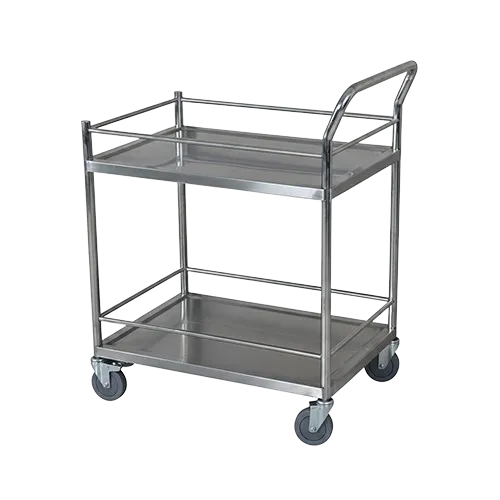
Our OEM engineering team neutralizes this risk through sterile design protocols. Our medical PU casters feature integrated thread guards that physically block debris from tangling in the axle. Furthermore, the cart chassis—whether constructed from Grade 304 stainless steel or medical-grade ABS polymer—features seamless, rounded corners and non-porous surfaces. This allows environmental services (EVS) teams to execute rapid, deep-chemical sterilization without fear of rusting the frame or degrading the wheel assemblies.
4. Maximizing ROI through OEM Customization and KD Logistics
For the international medical distributor, securing an advanced, silent clinical fleet is only half the equation. The ultimate profitability of a medical utility cart wholesale procurement strategy is determined by supply chain efficiency and product customization.
Partnering directly with a verified OEM facility provides two distinct advantages over generic intermediaries:
- Bespoke Clinical Solutions: We offer comprehensive OEM/ODM customization. If your hospital network requires specialized IV pole mounts, locking narcotic drawers, or exact color-coding to match specific clinical departments (e.g., blue for anesthesia, red for emergency crash carts), our R&D team will engineer the precise structural modifications before mass production begins.
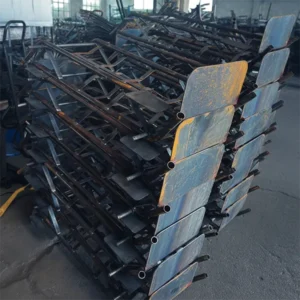
- Knocked-Down (KD) Container Logistics: Shipping fully assembled medical carts destroys your wholesale profit margins due to exorbitant ocean freight costs. We engineer our clinical fleets utilizing highly optimized KD packaging. By intelligently nesting the chassis components and shipping the PU casters unmounted in high-burst-strength cartons, we drastically maximize the density of a 40’HQ shipping container. This logistical mastery slashes your landed freight costs, providing your distribution network with a massive pricing advantage.
Conclusion: Upgrade Your Clinical Supply Chain
Sourcing equipment for the healthcare sector requires an uncompromising commitment to acoustic performance, hygiene, and structural reliability. Relying on generic, loud, and hard-to-clean equipment exposes your facility to lowered HCAHPS scores, increased staff fatigue, and severe regulatory liabilities.
By bypassing trading companies and partnering directly with a sophisticated OEM manufacturer, global distributors guarantee access to advanced PU caster technology, sterile frame engineering, and vastly optimized container logistics.
Do not let substandard equipment compromise patient recovery or inflate your supply chain overhead. Make the strategic choice to upgrade your clinical inventory today.
Ready to modernize your medical distribution catalog? Contact our B2B OEM Clinical Engineering Team today to explore our silent mobility solutions, request technical specifications, and secure highly profitable, direct-factory pricing for your next medical utility cart wholesale container order.