From Procurement Transaction to Capital Allocation: A Technical Framework for Operations Directors
Introduction: The Hidden Cost of Getting the Material Wrong
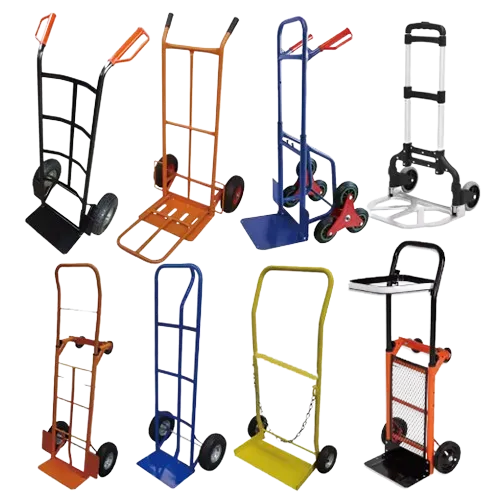
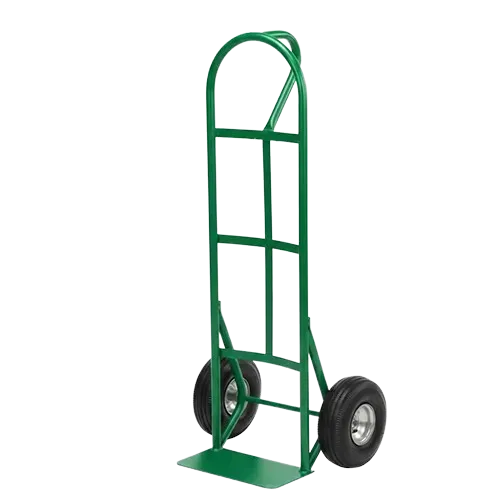
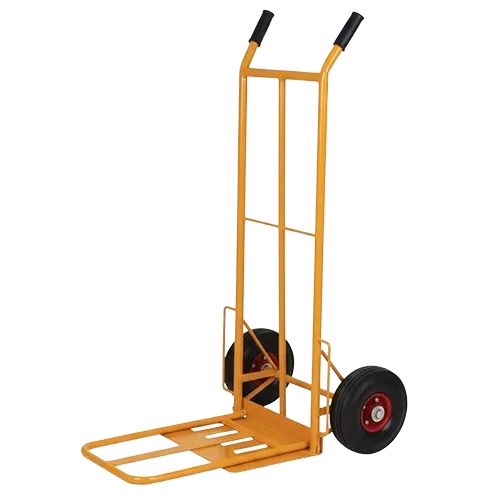
Imagine a procurement scenario played out in boardrooms every quarter: a manager is tasked with refreshing a fleet of 50 hand trucks. They find two options—one steel, one aluminum hand truck. The steel units are $40 cheaper per head. On paper, it’s an immediate $2,000 “saving” for the department.
Twelve months later, the ledger tells a different story. The repair log is filled with seized bearings from corrosion, frames sidelined by stress fractures, and a spike in “minor back strain” reports from the delivery team. In B2B operations, the purchase price is the least reliable indicator of value. The real cost lives in the shadows of downtime, labor fatigue, inbound freight weight, and accelerated replacement cycles.
This article establishes Total Cost of Ownership (TCO) as the only valid framework for this decision. We will not declare a universal winner because, in engineering, “better” is always relative to the environment. Instead, we provide the decision logic to identify the winner based on your specific operating parameters.
Part 1: Steel Hand Trucks — The Industrial-Grade Default
1.1 Why Steel is Heavy — And Why That’s Not Always a Problem
Steel’s density (roughly 7,850 kg/m³ vs. aluminum’s 2,700 kg/m³) is not a design flaw; it is the byproduct of its high tensile strength (400–550 MPa) and superior resistance to impact fatigue.
In brutal loading dock environments—where trucks absorb repeated collisions with steel pallet edges and concrete ramps—aluminum’s lower yield strength leads to micro-deformation over time. On a high-impact site, a dented aluminum frame is not cosmetic damage; it is a structural compromise that accelerates total failure. Steel, conversely, can absorb these high-energy impacts and return to service with its structural integrity intact.
1.2 Where Steel Performs Without Competition
- High-Impact, Low-Frequency Environments: Construction sites, heavy manufacturing floors, and loading docks with steel plate ramps require the raw durability of steel.
- Rough Terrain: The added self-weight of a steel truck actually improves stability when moving heavy loads over expansion joints or uneven outdoor surfaces.
- High Static Loads: For applications demanding sustained loads above 300 kg, steel’s yield strength provides a critical safety margin over most aluminum equivalents.
1.3 The Maintenance Reality: Corrosion vs. Coating
The single most important caveat for steel is corrosion. In humid warehouses or coastal facilities, the TCO advantage of steel collapses if the maintenance protocol is ignored.
- The Procurement Question: When reviewing a quote, ask: “Is this powder-coated only, or hot-dip galvanized?” Galvanization determines whether a truck lasts 3 years or 8 years in a wet environment.
Part 2: Aluminum Hand Trucks — A Precision Tool, Not a Compromise
2.1 The Strength-to-Weight Ratio Argument
Aluminum is not “weak.” For structural alloys like 6061-T6, the strength-to-weight ratio is often superior to steel for specific applications. A hand truck rated for 200 kg in aluminum weighs 30–40% less than its steel equivalent.
That weight reduction transfers directly to the operator’s cumulative workload. Over an eight-hour shift, this reduction in tare weight is a quantifiable hedge against repetitive strain injuries (RSI) and workers’ compensation claims.
2.2 Why Route Carriers Standardize on Aluminum
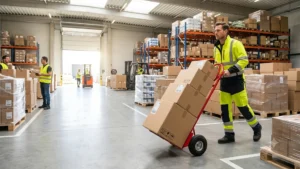
In high-frequency delivery (80–120 movements per shift), the weight penalty of steel compounds with every repetition. Furthermore, aluminum’s natural oxide layer provides inherent corrosion resistance, making it the rational choice for refrigerated logistics and food distribution where moisture and temperature variations are constant.
The Overlooked Factor: Inbound Freight Efficiency. Procurement teams often miss this: if you are importing 200 units in a 20ft container, a 3 kg weight difference per unit adds 600 kg of non-revenue payload. At current ocean freight rates, aluminum’s lower tare weight reduces your landed cost per unit.
2.3 The Limits of Aluminum
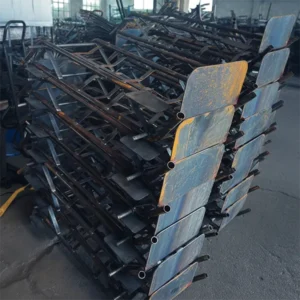
Aluminum deforms permanently at lower energy thresholds than steel when struck by sharp points (like forklift forks). Additionally, weld joints are the critical failure point; if MIG-welded joints are not executed with proper pre-heat and post-weld treatment, they develop stress cracks under cyclic loading faster than steel. Ensure your supplier provides weld process certification before placing a bulk order.
Part 3: B2B Performance Scorecard
| Criteria | Steel Hand Truck | Aluminum Hand Truck |
| Purchase Price | Lower upfront cost for equivalent capacity. | 15–30% price premium. |
| Self-Weight | 9–14 kg (Standard 200kg unit). | 6–9 kg (Standard 200kg unit). |
| Impact Durability | High; absorbs impact without permanent deformation. | Lower; deforms permanently at lower thresholds. |
| Corrosion Resistance | Poor (Requires high-quality coating). | Excellent (Inherent oxide layer). |
| Freight Efficiency | Lower (Higher tare weight). | Higher (Ideal for high-volume imports). |
| Scrap Value | Minimal. | 3–5× higher than steel per kg. |
Part 4: Decision Matrix — Matching Material to Environment
Scenario A: High-Impact Industrial Environments
- Profile: Construction, steel manufacturing, docks with metal ramps.
- Recommendation: Steel.
- Reasoning: These environments subject trucks to repeated point-impacts exceeding aluminum’s yield threshold. Weight-related fatigue is secondary to structural survival.
- Requirement: Specify industrial-grade epoxy powder coat or hot-dip galvanizing.
Scenario B: High-Frequency Route Delivery
- Profile: Beverage distribution, parcel logistics, grocery replenishment.
- Recommendation: Aluminum.
- Reasoning: High movement volume makes operator fatigue a direct operational cost. The price premium is typically recovered within 18–24 months through reduced injury claims and maintenance.
- Requirement: Document alloy spec (6061-T6) and weld certifications.
Part 5: The Detail Most Teams Miss — Casters and Bearings
The best frame—steel or aluminum—will fail if paired with mismatched sub-components.
- Load Matching: A 300 kg steel frame paired with 200 kg casters creates a failure point that invalidates the entire specification.
- Bearing Grade: Sealed precision bearings in high-moisture environments outlast open-race bearings by 3–5×. The unit cost difference is under $8, but the labor cost of a replacement cycle is massive.
- Wheel Material: Polyurethane for smooth concrete; Rubber for outdoor vibration damping; Nylon for high loads (but poor damping).
Conclusion: The Investment Perspective
A hand truck is not office stationery; it is production equipment that touches your throughput and labor health every day for 5–8 years. To reach a defensible decision, build a 5-Year TCO Model including:
- Landed Cost: Purchase price + weight-adjusted inbound freight.
- Operational Labor: Annual maintenance hours + injury/compensation exposure.
- Replacement Rate: Units purchased over 5 years.
- End of Life: Scrap recovery value.
The question is not “which material is better?” but “which material produces the lowest verified TCO in our specific environment?” Map your shift volume and impact frequency to the matrix in Part 4, and your answer will be self-evident.