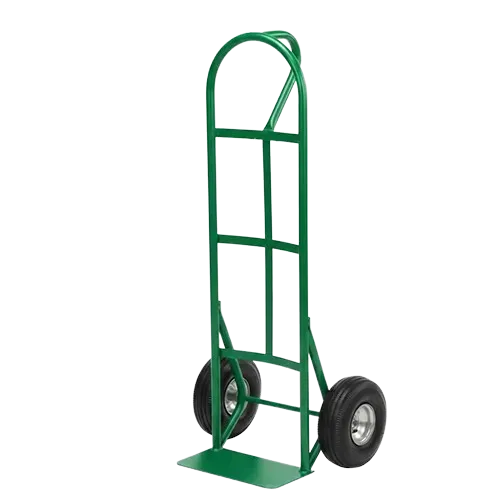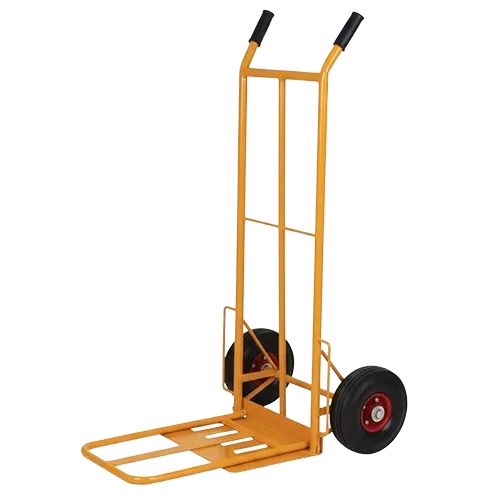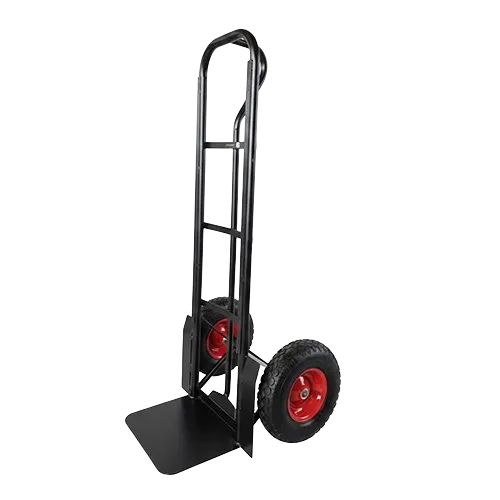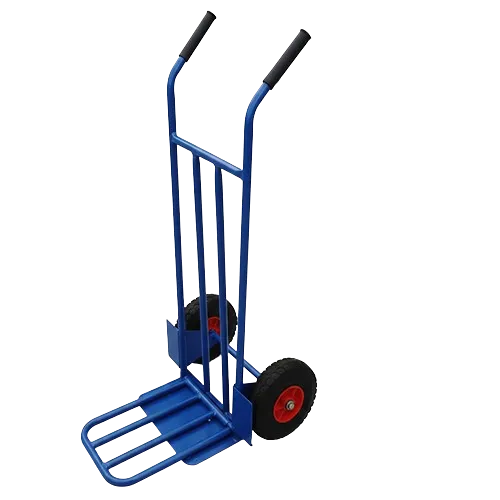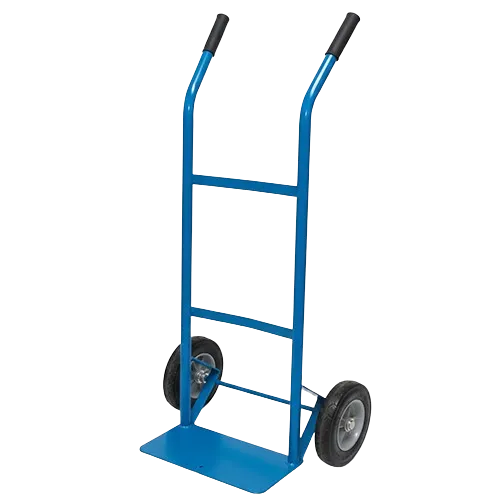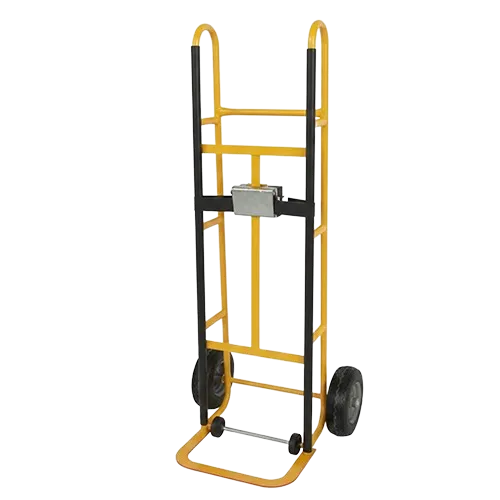
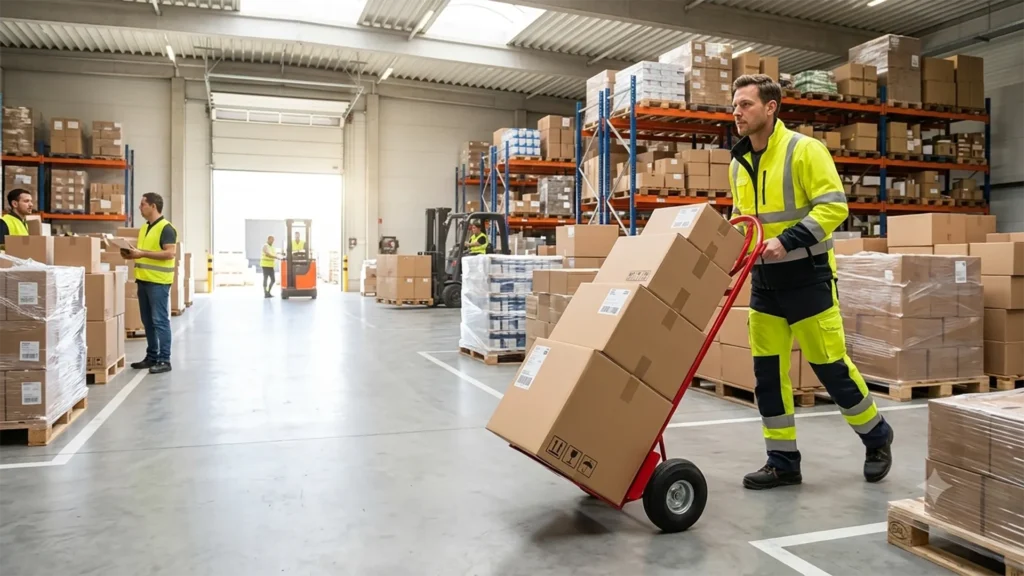
Buying commercial hand trucks from China is a smart move for your business. The manufacturing quality is high, and the factory-direct prices give you a great profit margin. However, many overseas buyers worry about the shipping process. How do you get heavy metal carts from a factory in China all the way to your warehouse in Australia, Europe, or North America without paying too much for shipping?
Don’t worry. This guide is written in plain, simple English to help you understand the entire logistics process. Step by step, we will show you how to pack, ship, and clear customs easily.
Here is everything you need to know about shipping your goods safely and cheaply.
1. Choosing the Right Packing Method (SKD vs. Assembled)
Before your goods even leave the factory, you need to make a big decision: How should the factory pack your hand trucks?
Usually, there are two ways:
- Fully Assembled: The hand truck is ready to use right out of the box.
- SKD (Semi-Knocked Down): The hand truck is flat-packed. The frame, wheels, and toe plate are packed closely together in a smaller carton. You or your customers will need to spend 2 minutes putting the wheels on with basic tools.
Our Recommendation: Always choose SKD flat-packing for bulk orders.
💡 The Why: Why is SKD packing so important?
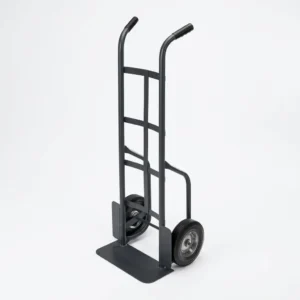
The Why: Space is money in ocean shipping. Hand trucks have an awkward “L” shape. If you ship them fully assembled, you are paying to ship a lot of empty air. By using SKD flat-packing, the cartons become neat rectangles. This allows you to stack them tightly. For example, with a smart SKD packing layout, you can fit up to 1,100 units into a single 40-foot container (40’HQ). If you ship them fully assembled, you might only fit 400 units. SKD packing cuts your per-unit shipping cost by more than half.
2. Selecting the Best Shipping Method
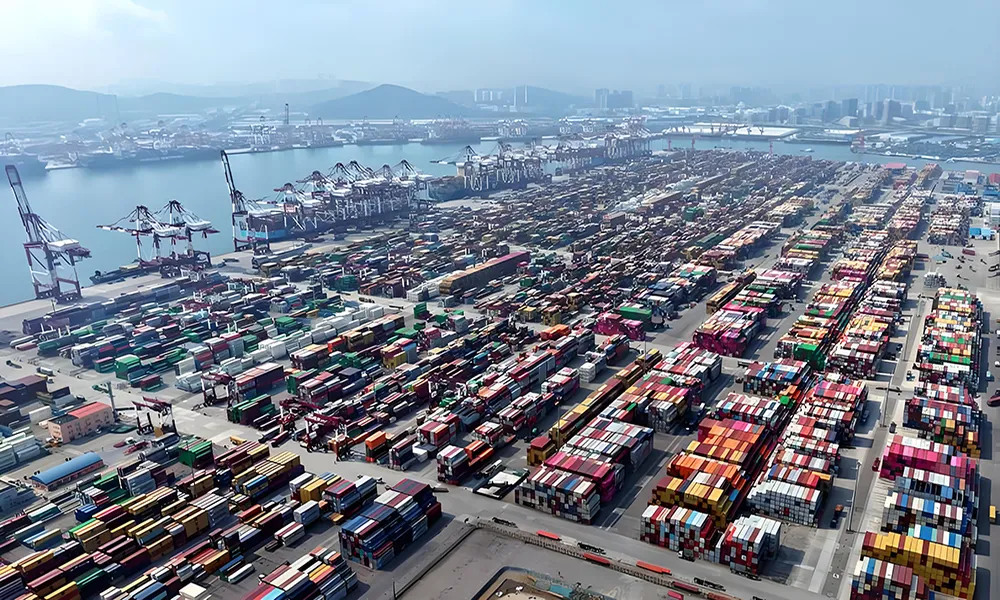
When importing commercial hand trucks from China, you basically have two choices for moving heavy goods: Sea Freight or Air Freight.
Because hand trucks are made of heavy-duty steel or aluminum, Air Freight is too expensive. You will lose all your profit paying for airplane fuel. Sea Freight (Ocean Freight) is the only way to go for bulk orders.
Within Sea Freight, you must choose between FCL and LCL:
- FCL (Full Container Load): You rent the entire 20-foot or 40-foot container just for your goods.
- LCL (Less than Container Load): You only buy 100 or 200 hand trucks, which is not enough to fill a container. Your goods will share a container with goods from other companies.
Our Recommendation: Try to order enough to fill a 20-foot or 40-foot container (FCL).
💡 The Why: Why is FCL better than LCL?
The Why: First, FCL is much cheaper per unit. Second, LCL takes longer because the logistics company has to wait to find other goods to fill the container before it leaves China. Third, with LCL, your cartons are loaded and unloaded multiple times, which increases the risk of scratching the powder-coated paint on your hand trucks. With FCL, the factory seals the container in China, and it stays closed until it reaches your warehouse. It is faster, cheaper, and safer.
3. Understanding Shipping Terms (Incoterms)
When you ask a Chinese factory for a price, they will use letters like EXW, FOB, or CIF. These are called Incoterms. They tell you who pays for what during shipping. Let’s keep it simple:
| Term | What it means in simple words |
| EXW (Ex Works) | The factory just makes the goods. You have to arrange a truck to pick them up from the factory door in China and handle everything else. |
| FOB (Free on Board) | The factory pays to move the goods to the nearest Chinese port (like Qingdao or Shanghai) and clears Chinese customs. You pay for the ocean ship and everything after. |
| CIF (Cost, Insurance, and Freight) | The factory pays for the ocean ship and insurance to your local port. You take over when the ship arrives. |
Our Recommendation: Use FOB for most bulk orders.
💡 The Why: Why do most experienced buyers use FOB?
The Why: Control. If you buy FOB, you can hire your own freight forwarder (shipping agent) in your country. Your agent works for you. They will find you the best ocean freight price and make sure the ship arrives on time. If you use CIF, the factory chooses the shipping company. Sometimes, the ocean freight looks cheap, but when the goods arrive at your port, the local agent might charge you very high hidden “destination fees.” FOB keeps your costs clear and transparent.
4. The Step-by-Step Logistics Timeline
If this is your first time importing commercial hand trucks from China, you might wonder how long the whole process takes. Here is a clear timeline of what happens after your factory finishes producing your order:
- Step 1: Booking the Ship (Day 1 – 3). Your shipping agent books an empty container from the shipping line (like Maersk or COSCO).
- Step 2: Loading the Goods (Day 4 – 5). The empty container is sent to the factory. The factory workers carefully stack the SKD cartons inside to make sure no space is wasted.
- Step 3: Chinese Customs Clearance (Day 6 – 8). The factory submits documents to Chinese customs to let the goods leave the country.
- Step 4: Ocean Travel (Day 9 – 35). The ship travels across the ocean. The time depends on your location. (For example, China to the USA takes about 20-30 days; China to Australia takes about 14-20 days).
- Step 5: Arrival and Local Customs (Day 36 – 40). The ship arrives at your local port. You pay import taxes, and local customs release your goods.
- Step 6: Delivery to Your Door (Day 41 – 42). A local truck picks up the container from the port and drives it to your warehouse.
💡 The Why: Why do you need to know this timeline?
The Why: Managing your inventory. If you know that shipping takes about 40 days, and the factory production takes 20 days, you know you must place your order at least 60 days before you run out of stock. This prevents “out of stock” situations, which can hurt your retail business.
5. Documents You Need for Customs Clearance
Customs clearance sounds scary, but it is actually just paperwork. To successfully bring commercial hand trucks from China into your country, you need the factory to send you four main documents:
- Commercial Invoice: The official bill showing how much you paid for the hand trucks. Your country uses this to calculate your import tax.
- Packing List: A detailed list showing how many cartons there are, the weight (KGS), and the volume (CBM).
- Bill of Lading (B/L): This is the most important document. It is the “ticket” for your goods. When the goods arrive, you must show this B/L to prove you are the owner.
- Certificate of Origin (C/O): A paper proving the goods were made in China.
💡 The Why: Why is the Certificate of Origin so important?
The Why: Free Trade Agreements! Many countries (like Australia, Southeast Asian countries, and some European nations) have special trade agreements with China. If you present a Certificate of Origin (sometimes called a Form A or Form E) to your local customs, they might lower your import tax to zero. This simple piece of paper can save you thousands of dollars in taxes.
6. How to Work with a Freight Forwarder
You do not need to own a ship or a truck to import goods. You just need a good Freight Forwarder. A freight forwarder is a travel agent for cargo.
They handle all the messy details for you. They book the ship, talk to the truck drivers, and fill out the customs paperwork.
How to choose a good one:
- Ask other business owners in your city who they use.
- Make sure they have experience importing metal tools or hardware from China.
- Ask them for a “Door-to-Door” quote. This means they give you one total price that covers everything from the Chinese port straight to your warehouse door.
💡 The Why: Why shouldn’t you do it yourself?
The Why: Port rules change every day, and customs paperwork is very strict. If you type the wrong number on a form, customs will hold your container at the port. The port will charge you “storage fees” for every day it sits there. A professional forwarder knows how to avoid these mistakes. Paying them a small service fee saves you from huge penalty fees.
7. Checking Your Goods When They Arrive
Finally, the truck arrives at your warehouse with your new hand trucks. What should you do?
- Check the Container Seal: Before the driver opens the doors, look at the metal lock (the seal). The number on the lock must match the number on your paperwork.
- Take Photos: Open the doors and take a few photos of how the cartons are stacked.
- Unload Carefully: Hand trucks are heavy-duty metal products. Even though they are packed safely in SKD boxes, do not drop the boxes from high up to protect the wheels and bearings.
- Inspect the Paint: Open a few random boxes. Check the powder-coated finish to make sure it looks perfect.
💡 The Why: Why check the seal before opening?
The Why: Insurance claims. If the seal number matches the paperwork, it means nobody opened the container during the ocean trip. If the seal is broken or the number is different, it means the container was opened (maybe by customs, or maybe stolen). By taking a photo of the broken seal before opening, you have proof for your insurance company if any goods are missing.
Summary
Importing high-quality commercial hand trucks from China is one of the best ways to grow your wholesale or retail business. The key to success is keeping the logistics simple and smart.
Always ask the factory for SKD flat-packing to maximize your container loading density. Buy enough to fill a Full Container (FCL) to lower your per-unit costs. Use FOB terms so you can control your shipping expenses, and always hire a local freight forwarder to handle the customs paperwork.
By following this easy guide, you will be able to manage your supply chain smoothly, save money on ocean freight, and keep your customers happy with a steady supply of heavy-duty hand trucks.