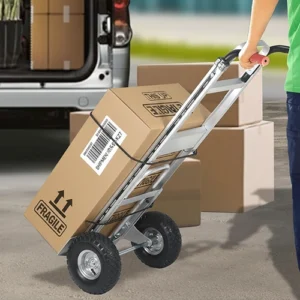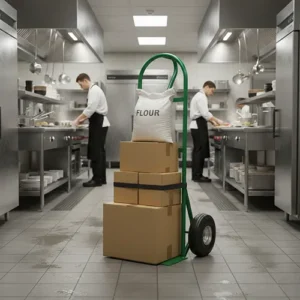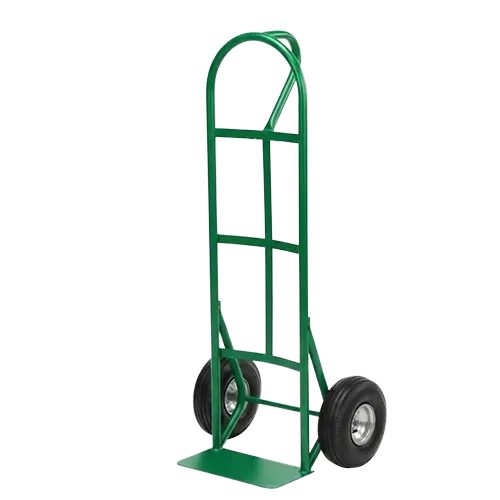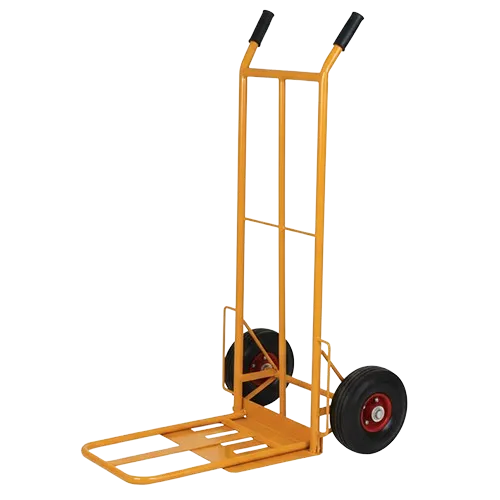
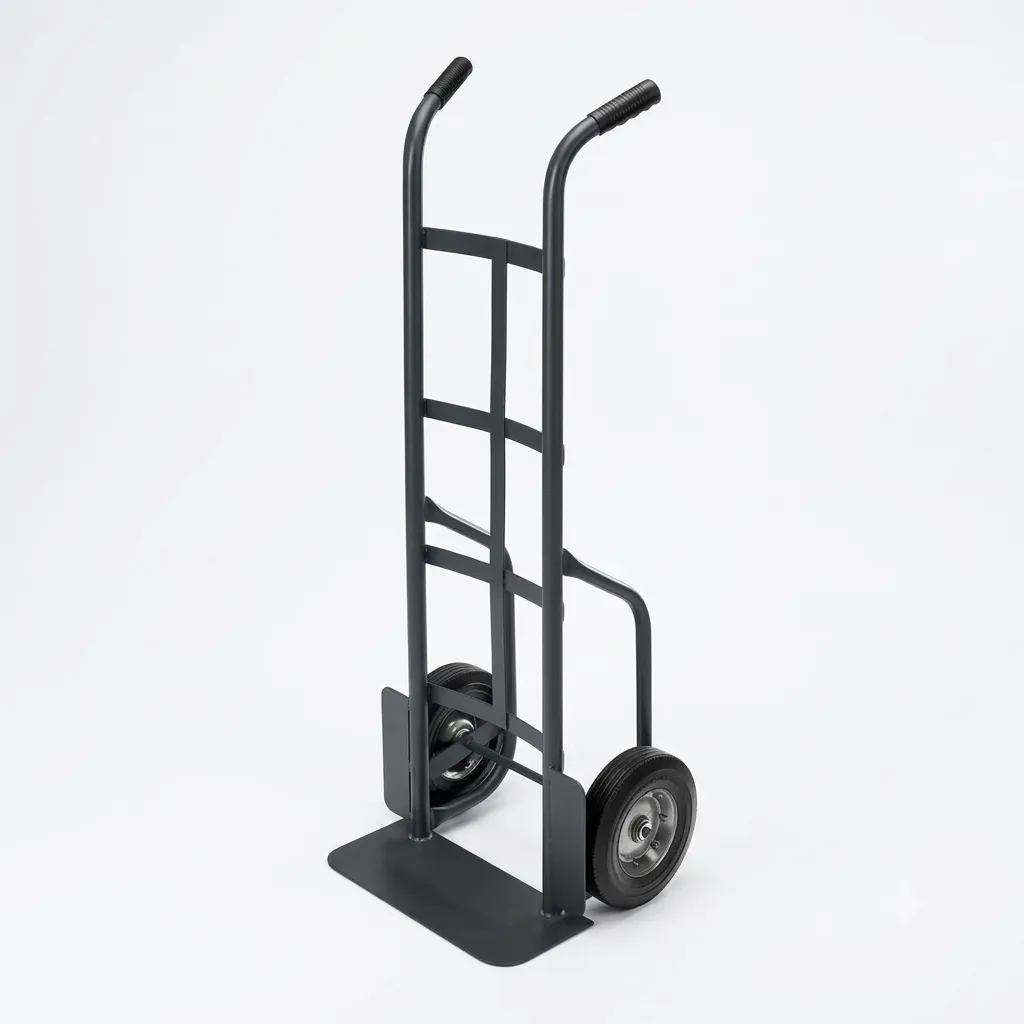
In the hyper-competitive landscape of last-mile logistics, a hand truck is far more than a simple manual tool; it is a critical node in your operational efficiency. When route drivers are tasked with moving hundreds of packages daily, the reliability of their equipment directly dictates your bottom line.
For over two decades, B2B procurement managers have struggled with a common dilemma: the rapid degradation of their delivery fleets. Purchasing consumer-grade carts leads to an endless cycle of equipment failure, which disrupts delivery routes, causes worker fatigue, and aggressively erodes wholesale profit margins.
This comprehensive technical guide explores the mechanical “Why” behind high-performance delivery equipment. It is specifically tailored for fleet managers and global distributors seeking to source a true commercial parcel delivery hand truck directly from an established OEM manufacturing facility. We will dissect the engineering benchmarks required to build a fleet that guarantees maximum Return on Investment (ROI).
Part I: The Anatomy of Failure — Why Cheap Hand Trucks Cost More
When a procurement manager reviews a preliminary sourcing spreadsheet, the unit price of a generic $35 hand truck appears highly attractive compared to a $65 industrial-grade OEM model. However, calculating the “Total Cost of Ownership” (TCO) reveals a drastically different financial reality.
1. The Bearing Crisis: Radial vs. Axial Loads
Standard route delivery involves pushing a fully loaded truck forward (creating radial load) and frequently tilting it to navigate tight corners, curbs, and warehouse thresholds (creating severe axial load).
- The Technical Gap: Most “consumer-grade” trucks utilize basic shielded friction bearings that are highly prone to environmental contamination. Once microscopic dirt and grit enter the unsealed raceway, the mechanical friction increases exponentially. This forces the delivery driver to exert up to 40% more push-effort, leading directly to physical exhaustion and delayed route times.
- The OEM Manufacturing Standard: A true commercial parcel delivery hand truck must be engineered with precision. We mandate the exclusive use of C3-clearance deep groove ball bearings equipped with 2RS double-lip rubber seals. This advanced engineering ensures that the industrial lubricant stays locked inside the bearing housing, while corrosive coastal humidity, dust, and rain are permanently locked out. This guarantees a frictionless glide even under a maximum payload.
2. The Pneumatic Trap vs. Polyurethane Solutions
Pneumatic (air-filled) tires have long been the “default” for many suppliers, but in high-frequency commercial parcel delivery, they are a significant operational liability.
- The “Why”: A single sharp piece of glass or a stray nail in a warehouse parking lot can instantly sideline a delivery vehicle. Repairing flat tires causes unacceptable route delays and inflates maintenance budgets.
- The Solution: The industry is rapidly shifting toward Micro-cellular Polyurethane (PU) solid wheels. PU wheels offer the exact same shock absorption as air-filled tires, effectively protecting fragile parcels during transit, but with absolutely zero risk of a flat tire. In our extensive manufacturing history, data indicates that switching a fleet to PU wheels reduces ongoing maintenance costs by over 60% across a 24-month operational period.
Part II: Material Science — Why 1.5mm is the Non-Negotiable Standard
In the competitive global manufacturing sector, many lower-tier factories utilize 1.0mm or 1.2mm steel tubing to artificially lower their raw material costs. However, when sourcing a reliable commercial parcel delivery hand truck, compromising on steel thickness is a fatal error. Here is why the 1.5mm wall thickness benchmark is strictly non-negotiable.
1. Dynamic Impact Factors in Route Logistics
When a courier drops a 150kg loaded hand truck down a single concrete step, the gravitational acceleration creates a massive “Instantaneous Impact Load.” This force is vastly different from a static warehouse load.
- Failure Modes: Standard 1.2mm steel tubes subjected to these violent conditions reach their metallurgical fatigue limit in less than 3,000 drop cycles. This inevitably leads to hairline fractures at the primary stress points, eventually causing catastrophic structural collapse.
- The 1.5mm Benchmark: Heavy-duty 1.5mm carbon steel tubes are explicitly engineered to withstand over 50,000 such high-impact cycles without experiencing any permanent structural deformation. The physics are undeniable: the dynamic impact during a curb drop is often 2.5x to 3x the static weight of the cargo. The frame must be built to absorb this shock.
2. Tube Bending and Critical Wall Thinning
A highly critical manufacturing detail that is frequently overlooked by basic trading companies is the Bending Radius of the steel frame.
- The Manufacturing Process: During the mechanical bending process to create the handles, the outer wall of the steel tube naturally stretches and thins out. If the initial steel is too thin, this curve becomes an immediate structural liability.
- The CNC Metric: Premium OEM facilities utilize hydraulic CNC mandrel bending machinery to ensure that the wall thinning rate is strictly kept below 8%. This advanced fabrication technique prevents the “weak link” phenomenon, ensuring that the truck’s handles will never snap under heavy load leverage.
Part III: Human-Centric Design — Combating Workplace Fatigue
B2B buyers, particularly in stringent North American and European markets, are increasingly focused on ergonomic engineering to prevent worker compensation claims and reduce employee turnover rates.
1. Handle Ergonomics and Vibration Damping
Long-term exposure to mechanical vibration (often referred to as Vibration-induced White Finger) is a legitimate occupational hazard for professional route couriers operating poorly designed equipment.
- Design Choice: To combat this, a premium commercial parcel delivery hand truck must utilize specialized Thermoplastic Rubber (TPR) grips. Unlike cheap, slippery PVC, industrial TPR maintains its aggressive grip texture even when soaked in rain or sweat, while simultaneously providing significant vibration damping to protect the operator’s hands.
2. The “14-Degree” Toe Plate Secret
Why is the angle of the toe plate so critical?
- Through rigorous biomechanical testing, engineering data proves that a precise 14-degree approach angle on the steel toe plate provides the optimal balance. It is perfectly angled for swift insertion under heavy cardboard parcels, yet provides the exact mechanical leverage required to effortlessly “break the load back.” This seemingly minor design detail effectively reduces the physical strain on the operator’s lower back by approximately 15% during a 10-hour shift.
Part IV: Manufacturing Excellence — Factory Quality Control
When you procure a bulk order of equipment, you aren’t just buying steel; you are buying the quality control processes of the factory that built it. True quality cannot be “inspected” into a product at the end of the line; it must be built into the process from day one.
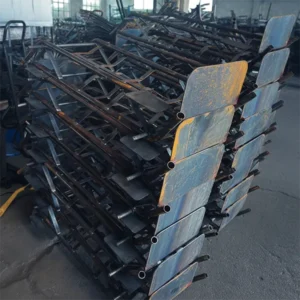
- Robotic Welding Integrity: We mandate the use of Continuous CO2 Shielded Robotic Welding rather than outdated manual spot welding. This automated process ensures deep, consistent thermal penetration at every joint, eradicating internal air pockets (porosity) that cause welds to fail under stress.
- Anti-Corrosion Surface Treatment: A reliable fleet requires a “Double-Protection” surface system. This involves a comprehensive Zinc-Phosphate Pre-treatment bath, immediately followed by an electrostatically applied High-Gloss Powder Coating. This multi-stage process cross-links the resin to the steel, ensuring the truck survives over 100 hours of intense salt spray testing—a crucial metric for products shipped through humid global ports.
Part V: The Logistics Advantage — Optimizing Global Export
For the international B2B distributor, the physical manufacturing of a commercial parcel delivery hand truck is only half the battle. The ultimate profitability of your procurement strategy is determined by how efficiently that equipment can be loaded into an ocean container.
1. Advanced Container Loading Schemes
In international maritime shipping, paying to ship “empty air” destroys wholesale profit margins.
- SKD Nesting Logic: As an advanced OEM facility, we engineer our hand trucks to be “nested” during transit. By utilizing a Semi-Knocked Down (SKD) flat-pack packaging strategy, we can compress the physical footprint of the unassembled units.
- Direct Savings: This dense packing architecture allows us to fit up to 22% more units into a standard 40’HQ shipping container compared to standard industry packing methods. This massive increase in shipping density effectively slashes your per-unit landed freight cost, providing your regional distribution network with a dominant pricing advantage.
2. Regulatory Compliance and Documentation
Importing heavy industrial equipment requires flawless international documentation to avoid disastrous customs delays.
- Customs Mastery: Partnering with an experienced OEM exporter ensures a “Zero-Error” documentation policy. We automatically provide full TSCA Statements, verified ANSI compliance testing data, and complete Material Safety Data Sheets (MSDS) for our PU wheel compounds. This meticulous attention to compliance prevents costly customs holds at strict international ports like Long Beach, California, or Rotterdam.
Conclusion: Investing in Supply Chain Reliability
While a commercial parcel delivery hand truck may represent a relatively small line item in a massive corporate budget, it is an indispensable tool that literally carries the weight of your daily operation. Choosing the cheapest available option is a guaranteed path to supply chain disruption and inflated replacement costs.
By bypassing generic intermediaries and demanding rigorous metallurgical standards, advanced C3 bearing technology, and highly optimized container logistics, procurement directors can secure a fleet that actively drives operational excellence.
Ready to upgrade your delivery fleet? Contact our B2B OEM Engineering Desk today to request full technical manufacturing specifications, review our strict salt-spray testing data, and secure highly profitable, direct-factory pricing for your next consolidated container order.
Ready to upgrade your fleet?