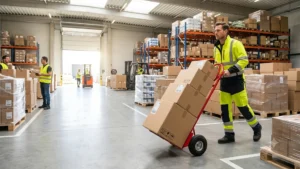
In the world of commercial logistics and warehouse distribution, not all boxes are created equal. While standard hand trucks are great for regular cardboard boxes, they often fail when workers have to move oversized crates, home appliances, furniture, or heavy industrial parts.
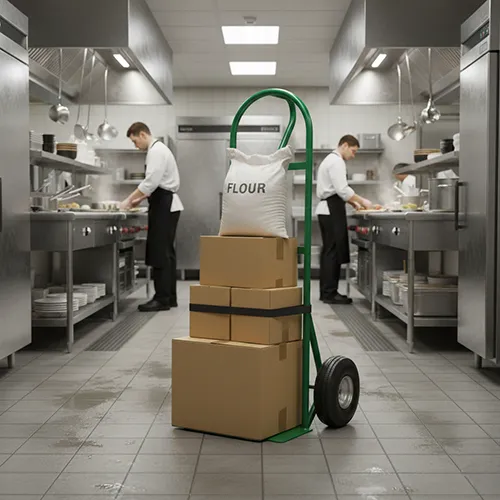
When a box is too wide or too deep, it hangs over the edge of a standard base plate. This causes the cargo to tilt, slip, or tip over completely during transit.
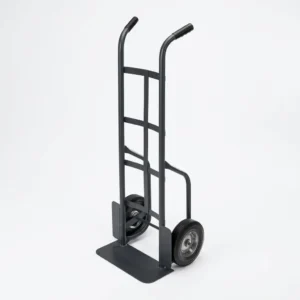
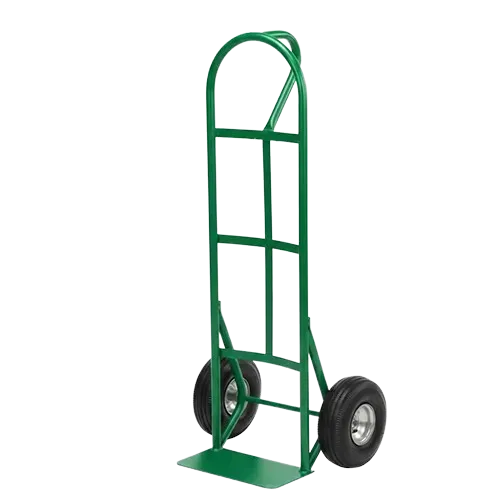
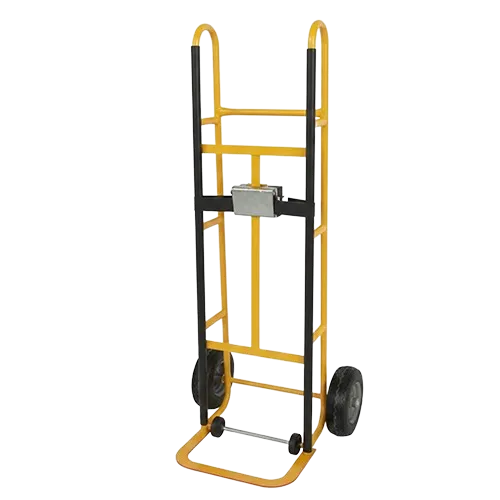
To solve this problem safely and efficiently, professional logistics managers and wholesale distributors rely on a custom toe plate hand truck. By extending or reinforcing the loading platform, these specialized carts change how heavy and awkward loads are balanced.
In this comprehensive guide, we will break down why standard carts fail, how custom load plates work, and what specifications you should look for when ordering in bulk from a factory.
1. Standard Toe Plates vs. Custom Extended Plates
To understand why modifications are necessary, let us look at a direct comparison between a standard retail cart and a heavy-duty model designed for large items.
| Feature | Standard Hand Truck | Custom Toe Plate Hand Truck |
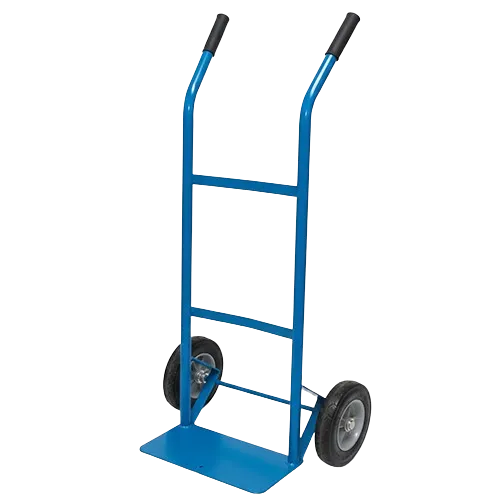
| Toe Plate Dimensions | Usually small (approx. 200mm x 150mm) | Extended or widened (up to 500mm x 300mm+) |
| Material Strength | Standard 2.0mm pressed steel | Heavy-gauge reinforced carbon steel with gussets |
| Cargo Stability | High risk of forward tipping for wide boxes | Balanced weight distribution with zero lateral slip |
| Primary Application | Small cartons, mail bags, and general parcels | Large home appliances, wooden crates, and barrels |
| Customization Options | Fixed size, no modifications available | Bespoke width, fold-out extensions, or beveled edges |
As shown in the table above, relying on a standard cart for oversized cargo puts both your workers and your products at a high risk of damage.
2. The Hidden Risks of Using Standard Carts for Oversized Goods
Many warehouse managers try to save money by using standard carts for every type of task. However, this creates hidden operational costs that add up over time.
- Operator Strain: When a large box overhangs a small base plate, the center of gravity shifts outward. The delivery driver has to pull backward with much more physical force just to keep the cart balanced.
- Damaged Goods: If a heavy crate slips off a narrow toe plate and crashes onto a concrete warehouse floor, the contents are instantly destroyed, leading to unhappy retail clients and expensive insurance claims.
- Wasted Labor Time: Workers spend extra time trying to tie ropes or bungee cords around oversized boxes to keep them from falling off the cart.
Choosing a custom toe plate hand truck eliminates these risks entirely by providing a wider, deeper physical foundation that supports the full footprint of the cargo.
3. Key Design Variations for Bespoke Load Plates
When you order a custom toe plate hand truck directly from a factory, you are not locked into a single fixed design. You can request specific structural variations depending on what your customers move every day.
A. Extended Depth Plates
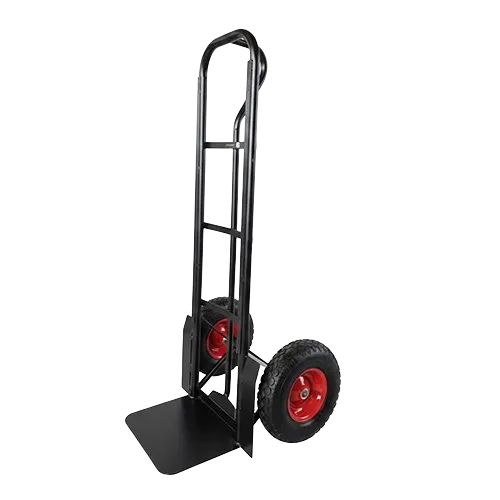
If your clients transport deep rectangular boxes or vending machine bases, a standard 180mm depth is not enough. You can request an extended depth plate (up to 300mm or more) so the entire base of the box rests securely on the steel.
B. Fold-Out Nose Extensions
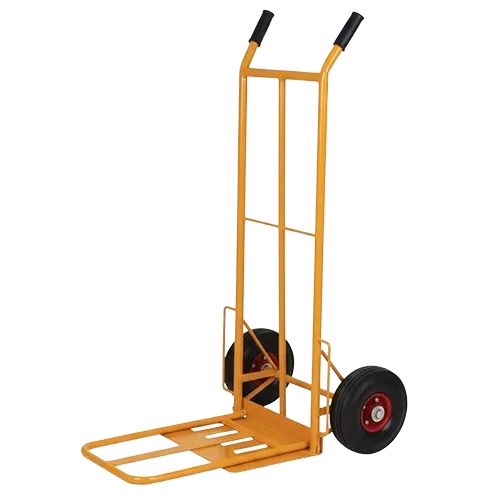
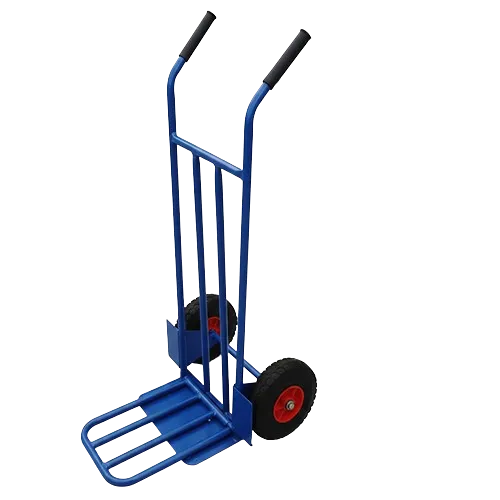
For maximum versatility, some fleets prefer a dual-purpose design. This features a standard fixed toe plate for normal daily parcels, combined with a heavy-duty fold-out extension plate that locks into place when an extra-large crate needs to be moved.
C. Beveled Front Edges
A great engineering detail is a beveled (sloped) front edge on the plate. This allows the worker to slide the plate smoothly underneath heavy wooden pallets or low-profile crates without getting stuck on tiny cracks in the warehouse floor.
4. Engineering Specifications for Heavy-Duty Performance
A larger plate means more leverage. If you make a toe plate wider and deeper, the physics of the lever change. If the steel is too thin, the extended plate will bend downward under a heavy load.
This is why manufacturing a custom toe plate hand truck requires strict adherence to industrial engineering standards:
- High-Tensile Carbon Steel: The base plate must be constructed from heavy-gauge carbon steel rather than soft, cheap iron.
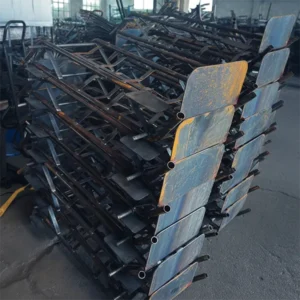
- Reinforced Gussets: Look closely at the welding joint where the horizontal plate meets the vertical frame. Professional factories weld triangular steel support gussets into this corner to prevent the plate from sagging under a 200kg to 300kg payload.
- Robot-Assisted Welding: High-penetration robotic welds ensure that the extreme stress placed on the extended platform is distributed evenly across the entire tubular frame.
5. Protecting Your Operators: The Ergonomic Advantage
In modern warehousing, worker safety is a top priority. Labor shortages and back injuries cost logistics companies millions of dollars every year.
When a custom toe plate hand truck is engineered correctly, it significantly improves workplace ergonomics:
- Optimized Tilt-Back Leverage: By matching the plate size to the center of gravity of large cargo, the initial effort required to tilt the cart backward is reduced by up to 30%.
- Secure Load Restraint: Many custom models include integrated vertical strap loops or rubber non-slip pads on the surface of the plate, keeping crates firmly locked in place during transport over rough pavement.
6. Logistics and Packaging: Maximizing Container Density
When you source a custom toe plate hand truck in bulk for your wholesale distribution business, you must also think about how it travels across the ocean.
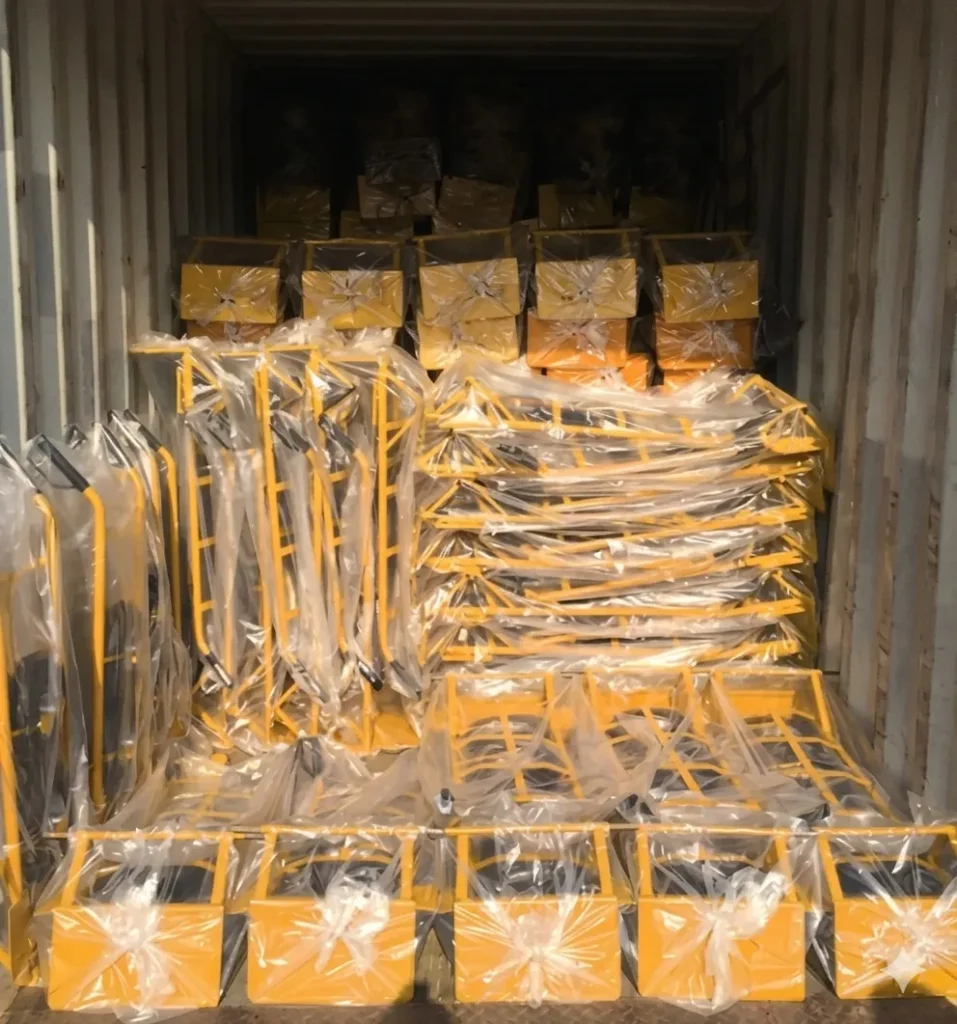
Because extended plates add bulk to the frame, poorly packed shipments can waste valuable container space. A premier manufacturing partner will use SKD (Semi-Knocked Down) flat-packing.
In an SKD layout, the frames, wheels, and specialized toe plates are bundled efficiently into compact, rectangular cartons. This allows up to 1,100 to 1,500 units to fit securely inside a single 40-foot high-cube container (40’HQ), keeping your per-unit shipping costs extremely low.
Conclusion: Upgrade Your Product Line Today
Standard tools are fine for standard tasks, but growing your B2B distribution business requires solving real-world problems for your customers. Offering specialized equipment tailored to heavy and awkward cargo sets your brand apart from generic competitors.
Investing in a custom toe plate hand truck ensures that your clients can move large appliances, bulky crates, and industrial components safely, quickly, and without product damage.
If you are ready to expand your catalog with heavy-duty, factory-certified material handling solutions tailored to your exact specifications, our engineering team is here to assist you from 3D CAD design to final container loading.
👉 Get in Touch with Us Today to Discuss Your Custom Toe Plate Requirements
Protect your cargo, reduce operator fatigue, and scale your wholesale business with professional, factory-direct manufacturing.